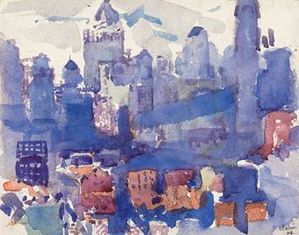
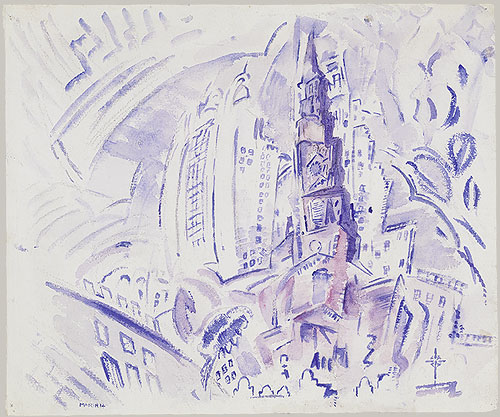
John Marin - view of New York
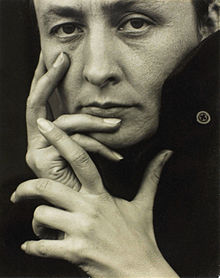
Is John Marin the greatest watercolor painter that nobody remembers anymore? I hadn't thought of him in a long time, but when I saw the exhibit 'Steiglitz and His Artists' at the Met, it was a chance to consider him again. It's a very interesting show, focused on Alfred Stieglitz's efforts and successes in bringing Modernism to America in the early 20th century. Stieglitz, best known for his own moody atmospheric photography from street scenes of bygone New York to sensual portraits of his wife Georgia O'Keefe, championed European modernists at his Gallery 291, years before America got its big jarring, choking dose of Modernism with the Armory Show in 1913.
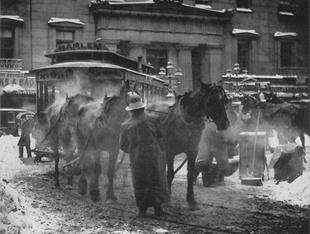
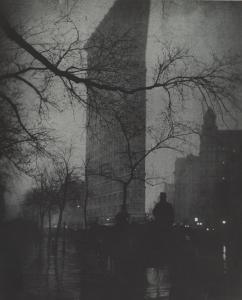
Stieglitz View of old New York
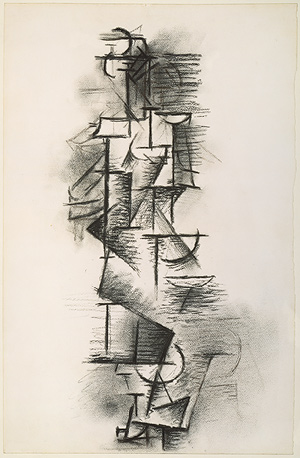
The Met sets up the chronology: first photographs, snow scenes with horse drawn carts and Edward Steichens' beautiful night scene of the Flatiron Building (1904), all recalling a mythic New York that barely resembles hipped-up, maxed-out Manhattan of today. After that (and after annoying his photographer pals for switching his mission) Stieglitz began showing European Modernists, including Matisse, Rodin, Picasso, Lautrec, Cezanne, Kandinsky and others. A room full of intentional shockers - crotch drawings and other 'private' pleasures - gives way to more serious aesthetic engagement with the best and most interesting work at that moment in time.
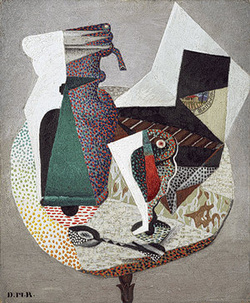
Diego Rivera Still Life
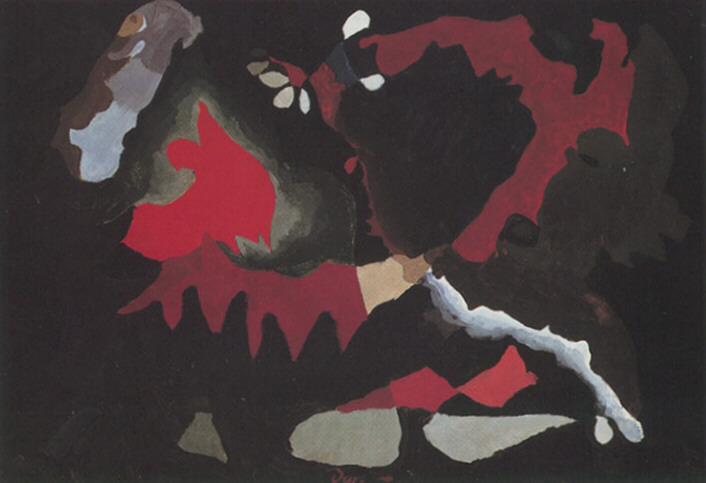
Americans are soon in the mix and the balance is pretty even, in the work if not in the big European names. There was important exchange going on, though it was all one-sided then; New World progressives, including Arthur Dove, Marsden Hartley, Marin, and Diego Rivera grabbed at what the Europeans were doing and built their own brave experiments based on fracturing traditions of space, form and color.
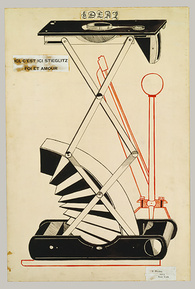
Francis Picabia "Here This is Stieglitz Here"
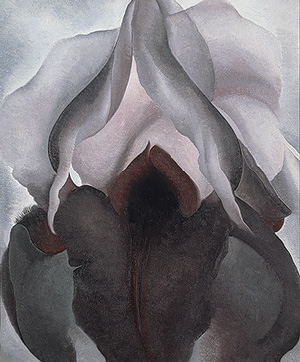
After 1913, his monopoly on Modernism broken, Stieglitz shifted almost exclusively to American artists, including Georgia O'Keefe, his newly discovered sensation about whom he supposedly said, "Finally, a woman on paper." Some thought Stieglitz had lost his nerve when he closed Gallery 291 in 1917 and stopped seeking out European Modernists. A Frances Picabia drawing of a bellows camera is a disguised portrait with a critical message; the bellows is detached so the camera no longer functions.
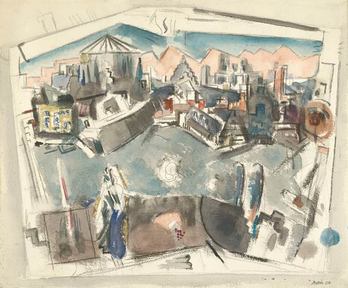
John Marin Lower New York from the Bridge
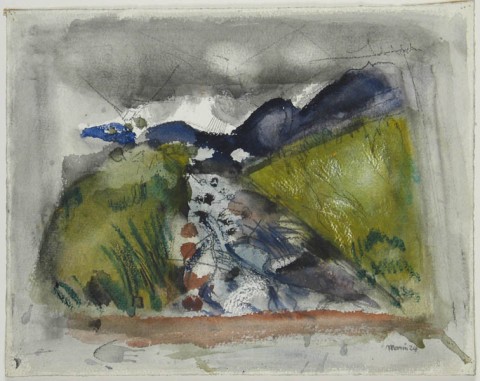
He opened The Intimate Gallery in 1925 with a close-knit group of Americans; the last group of rooms in the exhibit are the testament to their common will to define and proclaim a Modern art of this soil and this place. There are O'Keefes in abundance, but it was the Marin watercolors that held my interest. He had a particular way of cracking and reassembling space that gives a definite nod to Cubism, but with his own distinctly individual sense of blend and separation; it's as if he's piecing back together a jigsaw puzzle of his own devising. In the exhibit we see the arc of his work, from views of Paris (he spent six years traveling and learning in Europe) into stronger and more confident compositions of American elements - open spaces, broad seas and rocky coasts, as well as brassy New York City.
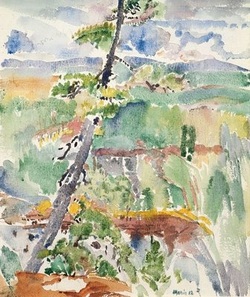
John Marin - view of Mt. Washington
His vocabulary of slashing strokes, dots and dashes, with color that moves from saturated strength to soft diffusion, gives his small-scale work a dimension that can be almost monumental. John Marin was one of Stieglitz's first artists, and their personal and professional alliance lasted 40 years; O'Keefe and Stieglitz were married at his house. There is a lot to see in New York right now. The deKooning show is a definite Do-Not-Miss - but don't miss this one either.
Stieglitz and His Artists: Matisse to O'Keeffe: Metropolitan Museum of Art through Jan 2, 2012
http://www.metmuseum.org/toah/hd/stgl/hd_stgl.htm
Stieglitz and His Artists: Matisse to O'Keeffe: Metropolitan Museum of Art through Jan 2, 2012
http://www.metmuseum.org/toah/hd/stgl/hd_stgl.htm


 RSS Feed