Picture
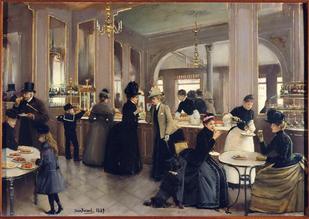
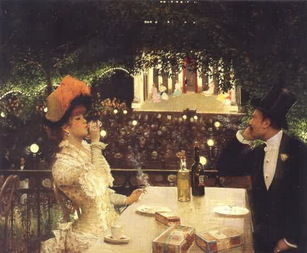
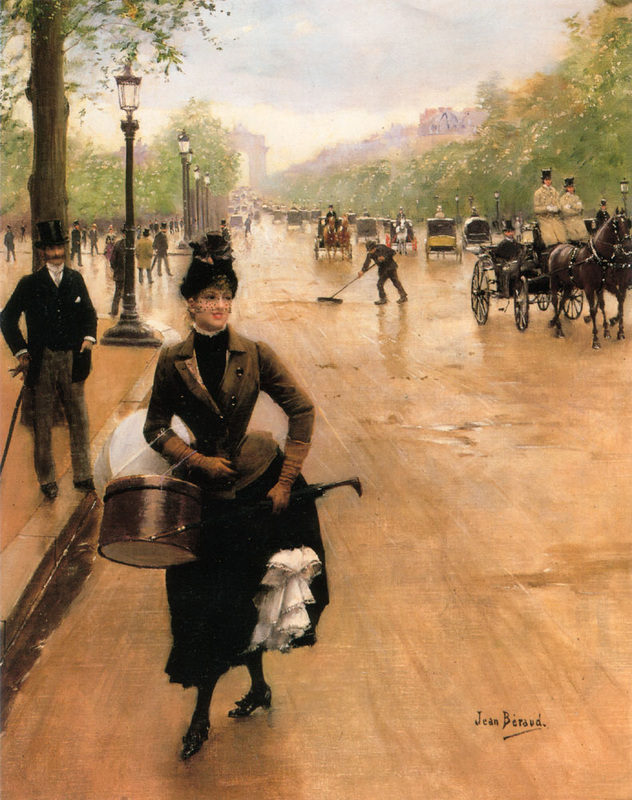
The reviews are coming thick and fast, so let me add my thoughts, fresh from a first peak at the Barnes Collection in its transplanted natural habitat. All that glorious (and some not so glorious) art is in back in place in the familiar yellow-walled galleries, sacrosanct arrangements intact, in the center of Philadelphia. The official opening this weekend will bring crowds streaming through the doors. The press opening gave me an idea of what that will be like - after my small group tour of the building a few weeks ago (see the archives for the post), the bustling multitude of reporters, journalists and cameras was a bit overwhelming - a relative tidal wave.

Picture
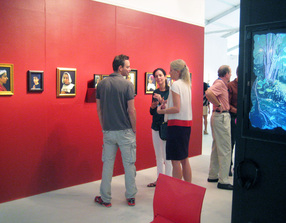
But how great to see the new spaces in full use - animated conversations, people chatting over lunch on the terrace, exchanges of admiration or puzzlement about the hanging of the art in the rooms. I especially enjoyed a discussion between two newcomers to the Barnes - one from England, one from France - trying to figure out how on earth a museum could possibly hang art from three different centuries on one wall. They might not have hit on the answer, but they had zeroed in on the heart of the Barnes way of doing things.

Picture
If you were worried about the move, rest easy - you'll find the galleries with their jumbles of great masterpieces, slight or more subtle works, ancient metal craft, wooden spoons and tin kettles intact and just as amazing, breathtaking, and sometimes infuriating as ever -  but improved. Better light makes everything fresher and easier to see - thanks mainly to good design decisions, new technology and slightly higher ceilings.

Picture
Dr. Barnes has in no way been left behind; he is still at your side every step of the way through the rooms (now fitted with simple benches and very helpful brochures) poking and prodding at you to look, really look at the art. You can almost hear him: 'Stop relying on labels or dim memories from art history classes! Pay attention!" There's a slightly musty, hallowed aura that clings to the yellow burlap walls he specified for the Merion galleries (recreated almost exactly), but Dr. Barnes was way ahead of his time.

Picture
Dr. Barnes, a physician/scientist (his invention of the anti-gonorrhea treatment Argyrol made him the fortune that made this extraordinary collection possible) called his system of putting together widely diverse works 'scientific' - empirical evidence based on color, form, composition, subject, and other considerations of aesthetic and physical 'fact.' His thinking, however, is also very contemporary - his 'Ensembles' (his name for his assemblages) shun a conventional academic hierarchy that is increasingly out of step with our Post-Modern multi-cultural mix of races, genders and voices. When you don't have prescribed lists and categories to rely on you have to 'Pay Attention' to the art, as Dr. Barnes commands. At the Barnes you're more easily able to remember that art has the power to startle, to shock, to hit you with force in the eye, head, and gut.

Picture
You'll never see it all at this spectacular new addition to Philadelphia's impressive roster of museums - there will always be something you missed, some new puzzle to figure out, some other combination or perspective. You'll need - and want - to come back again and again. (And how nice that you'll now be able to relax with a cup of coffee in the downstairs public lounge, browse a beautiful new bookstore, and enjoy other new creature comforts!) 

Picture
This move was a struggle on many fronts, but it's a great time for the fabulous, amazing Barnes Collection to emerge from the lovely Beaux Arts cocoon of the Merion Building. It can now come fully into view by a much wider world in its sleek, elegant new home.
Don't miss the fascinating exhibit in the new temporary gallery. 'Ensembles' illuminates Dr. Barnes' life, philosophy and quirky personality in a wonderful display of correspondence with artists and dealers, photos of his family (including the most beloved member, his dog) and collaborators, memorabilia (a bottle of Agyrol among other things.) His caustic, cranky, very lively sense of humor comes across best in letters he wrote rejecting the efforts of the 'high and mighty' to gain admission to see his pictures. Artists and manual laborers had much less trouble. We can all be glad we don't have to ask his personal permission to enter the Barnes, but he can be happy - I hope - that so many more 'common folk' can now be enriched by his art.
http://www.barnesfoundation.org/
photos by Marilyn MacGregor

I also have a longer article about the Barnes opening in the Broad Street Review - click to read it
http://www.broadstreetreview.com/index.php/main/article/the_new_barnes_worth_the_wait


Picture
AFP photo by Robert Michael
Myth met reality this week when we were treated to the phenomenon of a 'supermoon'- technically known as a perigree full moon for its proximity to the earth. The photos from all over the world are spectacular - this eye-popping example is from Dresden, Germany.  I'm a big fan of the moon (I'm hardly unique - you probably are too) for its often startling beauty and the magical nature of its perceived changes.

Picture
Arthur Dove: Me and the Moon 1937
Human may have trod on the surface, planting flags and leaving dusty footprints, but when that silvery ball or sliver hangs up there among the stars on a dark night, it's easy to understand why humans have always found it a source of mystery and power, for good and for bad. The full moon can bring riches and cure warts, but it can also drive you mad.

Picture
Hiroshige: Saruwaka (late 19th c)
A full moon is always an event - with our scientific mindsets we understand the movement of the tides, the moon's relation to the sun and earth, etc., and watch it simply for the pleasure it brings - but in a more agricultural time and place it signaled essential steps in the growing year. The names of the full moons for Native Americans identify expectations - Full Hunger Moon in February, Full Worm Moon in March when the ground starts to warm and life begins to reappear, Full Corn Moon in September, commonly known as the Harvest Moon, which marks the harvest and signals the Autumn equinox.

Picture
William Blake: The Wandering Moon 1820
 I hope you got to see this month's 'supermoon' - I watched it with friends in NW Connecticut as it emerged dramatically from behind a thick bank of clouds and rose until the sky glowed silver - so beautiful! Many artists have tried their luck at catching moonbeams - in tribute to the moon, here is a selection from various times and places.

One of the moons comes from Maurice Sendak's In the Night Kitchen, published in 1970. His death yesterday means a great loss to children, to illustration, and much more - his legacy is enormous. He'll have his own tribute - coming soon.


Picture
Landscape at Cagnes 1923 (Columbus Museum of Art)
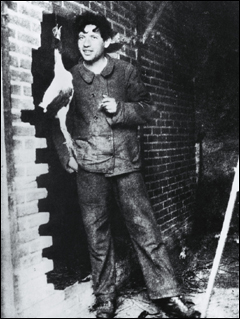
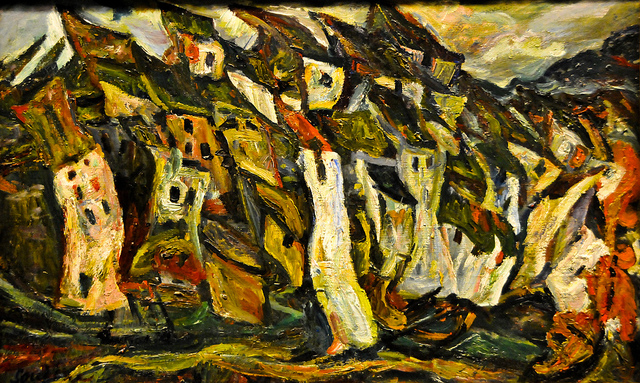
I'm now teaching a class I'm calling 'Midnights in Paris' (thanks to Woody Allen for the idea) which looks at 5 'fantasy' eras of French art and history. The first in the series, the early 20th century, includes an artist we'll be seeing more of once the Barnes Collection reopens later this month. Chaim Soutine is the artist, and his story with Dr. Barnes makes a good headline: Starving Russian Artist Saved from Misery and Oblivion by famed American Millionaire Art Collector. The full story, of course, has a bit more to it.

Picture
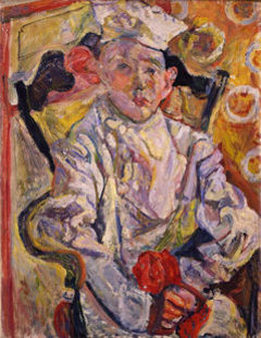
The Pastry Chef 1919 (The Barnes Collection)
Soutine, born in a small Russian village in 1893, was beaten up at age 13 for breaking strict Jewish rules by drawing his rabbi - after weeks in the hospital he took the 25 rubles awarded as damages and got out of town - first to art classes in Minsk, and then to the art mecca of the time - Paris. For 10 years he lived hand to mouth in a series of creaky artist studios in Montparnasse where he became close friends with other artists, especially Modigliani. His first art dealer, Leopold Zborowski, supported him after a fashion without much real success in selling his work - until the fateful day in 1922, when Dr. Barnes walked into the gallery run by Paul Guillaume (a garage mechanic who rose to be a celebrated art dealer and collector) and noticed a small painting of an unlikely subject - a pastry cook.

Picture
Madame Castaing 1929 (Metropolitan Museum)
An introduction to Zborowski, a trip to Soutine's studio, and Barnes snaps up the whole lot of Soutine's work - some say 60 paintings, some say 100 - for a total of $3000. As far as Soutine was concerned, this was the treasury of Midas - as soon as Barnes left the premises, Soutine closed the door, hailed a cab and had the driver take him to Nice on the French Riviera, 200 miles away. It was a true turning point - the infusion of cash and belief in his work may even have saved a starving artist's life. Soutine returned to Paris and built on his success; his work began selling, he acquired a new apartment and studio, nice clothes (it is said that he became a 'dandy' in elegant shirts and silk ties) and wealthy patrons.

Picture
Carcass of Beef 1925 (Albright Knox Gallery)
Rollercoaster years followed, with health problems and an ornery disposition causing problems - and then came the Nazi occupation of Paris. Soutine, a Jew, fled Paris and when he tried to return was refused. He made it back at the very end of his life, assisted by Marie-Berthe Aurenche, the ex-wife of Max Ernst, and died in a Paris hospital. His 1943 funeral at the Montparnasse cemetery - 'on a sunny day' according to Marie-Berthe - was small and quiet, but Picasso was there to pay his last respects.

Picture
The Table 1919 (Orangerie, Paris)
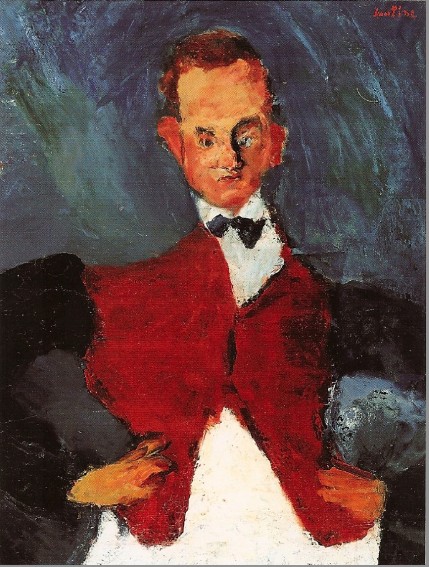
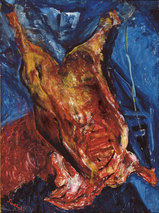
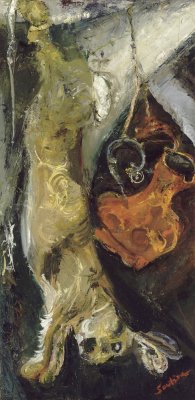
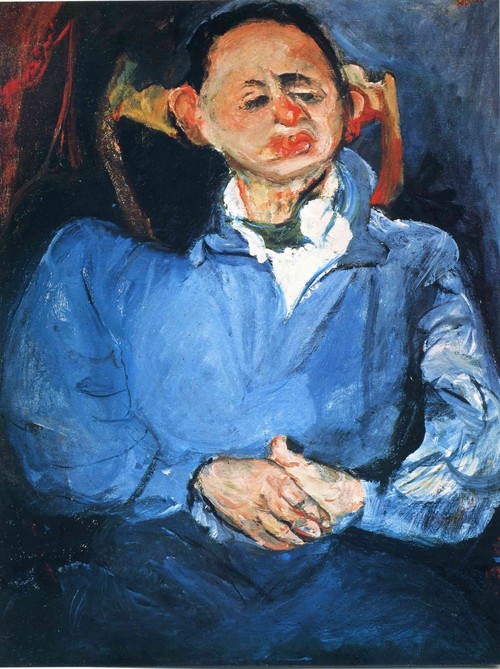
The US, thanks to Dr. Barnes, is the place to see the best of Soutine's work. Though sometimes classed as an Expressionist, Soutine's quirky, animated swirly style is unique. The charming and the grotesque balance precariously in his color saturated compositions, whether the subject is landscape or still life, raw carcasses (a favorite theme) or portraits of friends and patrons. Barnes's recognition of the unknown Soutine is, for me, one of the signatures of his own extraordinary story: the confidence and exceptional eye signaled by that 1922 purchase make this landmark collection significant for more than the fantastic array of works alone. It marks a symbiosis between art and collector that is rare at any age.
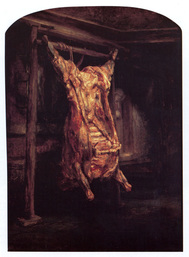
In 2006 one of Soutine's carcass paintings, 'La Boeuf Ecorche,' sold for $13.8 Million.
Paintings shown are representative of Soutine's work but not necessarily in the Barnes Collection.
http://www.barnesfoundation.org/collections/art-collection/artist/51/chaim-soutine


Picture
Anna Gonzalez on Etsy
It's not that hard to call yourself an artist - the word has become almost meaningless. Being an artist, however, is still not easy, and making a living as one is as tricky as it's ever been - maybe more so. Galleries are invaluable - as in Philadelphia's Old City area, good galleries and dealers can center the energy of a lively, thriving arts scene and provide vital community spaces. It can be tough, though, for an artist to find the right one or to find one at all. But thanks to the technology we all love/hate, there are lots of opportunities for artists - and for viewers and collectors - that didn't exist before.

Picture
Marilyn MacGregor on Etsy
So this blog post is dedicated to working artists who engage with the promise and potential of online galleries as the newest way to get their work noticed and, with luck, sold. A disclaimer: I'm on that list. I'm a believer in social media as a living community, and in the opportunities made available by online art spaces - my participation is a vote for these avenues as a good thing for human and arts interactions.

Picture
Sally Mara on Etsy
You probably know the biggest of these sites - Etsy. Etsy, which got started in 2005 (it has a Wikipedia page, surely a mark of success!) is well-known as the go-to site for charmingly hand-crafted home decor, clothing, kid's stuff and objets in general. It also allows vintage sellers and craft suppliers. What you may not know is that there are a lot of very good artists on Etsy, often successful illustrators or gallery artists who like having a way to sell lower cost prints or even originals direct from their studios.

Fine Art America is another big site, one that is more focused on 'fine art.' There's a lot of very amateur and questionable work to sort through, unfortunately, but it's worthwhile taking a careful look - you can find truly 'fine' artists on FAA offering their work as low priced prints and cards. Behance is another quality online portfolio site, this time geared towards illustrators and graphic artists - some really amazing things. Some of the work is for sale, or you can find links to where you can purchase prints. Major illustrators and designers show their work on Behance - as with all these sites, you can show your appreciation for impressive skill and imagination with a comment or a click on a button.
Picture
P Maure Bausch on FAA
Picture
Eric Hancock on Behance
Picture
My card for the Surtex Show in May in NY
Recently I've been working with agent Kimberly Montgomery of Montage Licensing on designs and illustration work for the Art Licensing field, including paper, textile, and other uses. In the course of learning more about this field I've discovered another fun site where you can find original art, this time in the form of fabric designs. The site is called Spoonflower - you'll have a great time browsing through an abundance of original designs by real artists. You can purchase these unique fabrics for a single pillow or a complete overhaul of your upholstery!

Picture
Cestlaviv - Vivian Ducas on Spoonflower
Most artists by nature are multi-taskers. These sites are a few of the ways that they can show their work in more than one dimension and for multiple purposes. It's a huge opportunity for buyers too. It may take a little patience to sort through and find favorites, but life is like that - and it can be fun and very rewarding. You'll be looking at art and artists from all over the world. (Anna Gonzalez - at the top of the page - lives in the Canary Islands) I've included some examples from each of these sites, chosen almost at random in a search for high quality and my own taste, with links to the work on the sites (click on the images). I've also included my links - please click on them to take a look and leave me a comment or a click!
http://www.etsy.com/shop/MacGregorArt
http://fineartamerica.com/profiles/marilyn-macgregor.html
http://www.marilynmacgregor.com/
http://www.behance.net/marilynmacgregor/frame


Picture
Estudio para Juan Miguel Juan - Compuestos
Photography can be a passive medium, and photography presented as art can sometimes seem only inches away from what anyone can do with a digital camera and a sunny day. Rarely are there sensual clues - surface technique or obvious texture - as in other mediums. A fine eye and quick reflexes often make the difference between the ordinary and the significant in photography, but such nuances may be missed or taken for granted. German Gomez, whose work is currently at Bridgette Mayer Gallery in Philadelphia, is not so subtle.

Picture
Retrato III
His large format portraits of men take different forms and address different issues, but all are bold statements enhanced in some way by subtractive or additive manipulation, including cutting, stitching and collage. Gomez, who is from Madrid, appears to have chosen his subjects for their dark-eyed, romantic good looks; even jagged alterations to faces and bodies fail to mar a sturdy attractiveness.

Picture
Fichado y Tatuado 1042
A section of the show called 'Tatuados' (Tattooed) features 'fichados' - men with police records - posed with the insouciance of fashion models while flaunting memorable, delicately drawn tattoos; the hard facts of their police identities under the photos both contradict and emphasize the beauty of the images.

Picture
Robert Peter Marc - Compuestos
Gomez's Compuestos (Composed) series, as the title implies, includes collaged portraits that incorporate different angles of the same face, evoking a surreal play of mental and physical identity. Some portraits make use of stitching with black thread and translucent layers, a rich effect with endless possibilities, while others have a harsher, more insistent push into the macabre. Gomez's work is provocative and at times unsettling, yet it never relinquishes a enduring sense of clean magnetic beauty.


http://www.bridgettemayergallery.com/exhibitions
Images courtesy of the Bridgette Mayer Gallery


Picture
Dibujado XVII
Picture
Estudio pap Nacho
 
 
Picture
Self-Portrait with Two Circle 1661 Kenwood House
Rembrandt is no stranger to New York, but another masterpiece is always welcome. One of his greatest self-portraits just moved into the Metropolitan Museum for a visit - only a few weeks, but we'll take it. This sublime late work comes from Kenwood House, London, a grand 'stately home' once owned by a scion of the Guiness family, somewhat modest on the outside but with a bounty of graceful rooms remodeled by Robert Adam in the early 18th century, a fabulous art collection and, apparently, a leaky roof or other pressing needs that require it to be closed for some time.

Picture
Kenwood House, London
I was in London for Christmas about a year ago and by chance stayed near Hampstead Heath, the vast, mythic park where Kenwood House is located. I hadn't even heard of the place before I arrived, but you can be sure that as soon as I did I pulled on my boots, wrapped up in a warm scarf, and tromped across the windy expanse to get there. I treasure the memories of that day, a chilly but glorious catalog - ducks on a frozen pond, bare regal trees against a lowering grey sky, family groups and brave stragglers, most with big dogs, footing made treacherous by both mud and ice, confused signposting finally resolved by a stranger's phone gps, then a stile and a small marker: Kenwood House this way.

Picture
Hampstead Heath, London
Picture
Inside Kenwood House
And at the end, like Oz at the end of the yellow road, this amazing repository of art, a collection that would more than hold it's own in any museum in the world. (Of course, after that trek, the teashop came first - warm filling soup, good bread, and well ... tea.) I'm glad that the house is being maintained and repaired, and how nice of the English Heritage society that now owns the house to share the Rembrandt and other works while they go about their business. (The Rembrandt will join the rest of the collection for an traveling exhibition after the New York stay.)

Picture
Self-Portrait 1658 Frick Collection
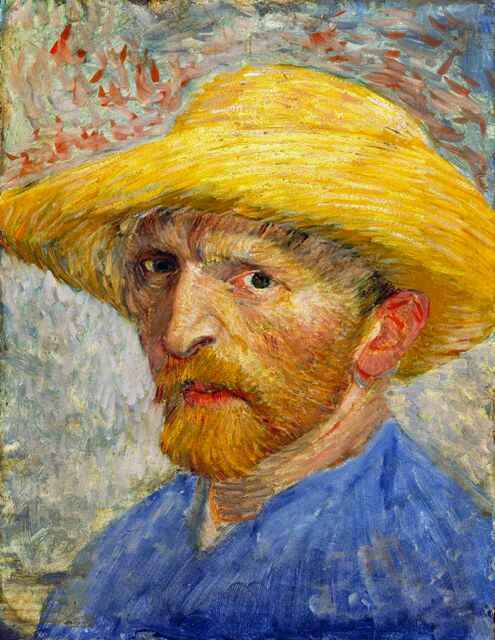
Rembrandt's 90 self-portraits, more than any other artist, are an incomparable treasure and record of his art and life, but this one is one of the greatest. Dating from 1661, after wrenching ups and downs in his personal and financial life and only 8 years before his death at 63, it's a near companion of his sublime 1658 self-portrait, permanently in residence at the Frick a few blocks away on Fifth Avenue.  Done in Rembrandt's bold brushy late style, both are richly, deeply profound - at once examinations of a single man, the artist by practice and idea, and all of human nature. The Kenwood Rembrandt, titled Self-Portrait with Two Circles, is one of several self-portraits that show him as an artist - it is him, rather than him dressed in costume or affecting a pose or expression. (In the Frick painting he is a regal character in a voluminous robe holding a scepter-like cane - the Frick description rightly includes the word 'majesterial.')

Picture
Self-Portrait with Two Circles (detail)
In the 1661 self-portrait he is as worn as an old piece of leather, dressed in cap and cape to keep warm while he works. He confronts us with a clear-eyed look of assurance, perhaps even defiance, and holds his tools, sketched so loosely that they are as much idea as fact, so we can't miss them. The circles on the wall behind him are the subject of some speculation; one opinion is that they are the first strokes of a globe, a motif linked to Dutch world trade that often appeared in paintings of the time. I prefer another idea: these are the circles of Apelles, court painter to Alexander the Great, who set the bar for artists ever afterward by drawing a perfect circle with one unbroken stroke. The challenge is recalled throughout art history as the ultimate challenge of skill, control, and confidence. At this point in Rembrandt's life his only competition was himself; the world had done its best to beat him and subdue him, but here he is, still at work, and painting rings around any other living artist - and most who came after.


Picture
Billie Tsien and Tod Williams
The new Barnes Foundation on the Ben Franklin Parkway in the center of Philadelphia will be open in just a few weeks - May 19 is the kickoff date for members. After all the controversy and (much ridiculous) ranting and raving, the storied collection is being hung, and workers are scrambling to finish up construction and landscaping. I had the good fortune to be on a tour last week with Tod Williams and Billie Tsien, the architects for the building, so here's a first-hand preview.

Picture
from the Parkway side
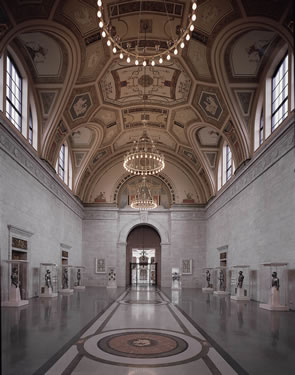
The new building is miles away, figuratively as well as literally, from the 1922 Beaux Arts building designed by Paul Cret in Lower Merion. This isn't bad - it's good. The old building is beautiful, but served a different time and audience. The new building is clean, elegant, spacious, and full of light, with spaces tailored for use by a broader public than ever saw the Barnes Collection in its original home, including an auditorium, classroom, library and a lounge with a café. A gallery for temporary exhibits and a well-appointed, up-to-date conservation studio expand the purposes and possibilities. The dramatic center of the new building is a light-filled hall that divides and connects, with the entrance areas and new gallery on one side and the revered collection, intact and carefully preserved in galleries that precisely reproduce the old experience in letter and spirit, on the other.
Picture
The terrace with cantilevered overhang
This high, wide central atrium space leads onto a terrace under a cantilevered overhang, meeting the garden setting for the building and allowing for a pleasantly veiled view of the busy city beyond the trees. ‘A Gallery in a Garden’ was the architect's mantra, one they fulfilled in large and small ways on all sides of the building. One garden is even inside, opening to the sky to bring in light and  air to lower level spaces where people will congregate. Along the Parkway a long section with a rectangular fountain will be an open public garden.

Picture
The facade mosaic
The building is faced with smooth limestone slabs of varying size, fitted into a mosaic spaced with slits and windows. Crowning the roof is a frosted glass clerestory that softens the geometric shape against the sky and brings an abundance of filtered light into the interior spaces. The exterior stone, a soft golden color and almost soft to the touch, is also inside - in places chipped by hand in a regular/irregular pattern the architects call ‘cuneiform,’ and in others given a different texture that quietly bounces the natural light. The architects' attention to materials that have meaning as well as aesthetic appeal is also evident in the wooden floor of the central hall. Laid in a herringbone pattern of varying tones, the boards are recycled from the old Coney Island Boardwalk in New York!

Picture
Inside the old Barnes (soon to be inside the new)
Huge wood framed windows with mullions looking into the galleries from the hall are a reminiscent feature that visitors to the old Barnes will recognize; here though, for the most part, the windows won't be shaded. We weren't allowed into the galleries on our tour, but we could glimpse a few frames and ... yes, Barnes’s beloved gadgets on the... yes, burlap covered (or what looks like it) - walls. Apparently there are a few changes that will enhance the galleries such as higher ceilings, but nothing noticeable - we were assured that the maximum difference in the hanging of any of the works would be 1/8 inch.

Picture
The 'cuneiform' pattern on the stone
The building systems, unseen but essential, are a testament to modern technology; the Barnes has been awarded a LEED Platinum certification for energy efficiency, the highest rating possible and a rare achievement. The collection will benefit in a number of ways, including a shade system to precisely regulate light to ensure the best levels for the paintings at any given time.

Picture
almost there
Standing back from the building I once again had a chance to consider how thoughtfully and well the design balances respect with innovation, inside and out. (I had had the same thought on seeing the plan presented in 2009 at a public meeting.) The façade with its irregular mosaic pattern could be a metaphor for Barnes’ own eclectic philosophy. A careful, logical plan with beautiful materials, both mellowed and energized by irregularly sized openings - personal preferences, artistic choices, various cultural traditions, a mix of unexpected elements.

All building photos by Marilyn MacGregor (no inside photos were allowed)

http://www.barnesfoundation.org/


Picture
The Whitney Biennial has been pretty sickly of late so I was encouraged by reviews calling it the best in years, promising that this one was different, in a good way. I saw it Friday and don't agree - neither the 'best in years' part (though that's a fairly low bar based on the last two or three) or that the art was particularly different.

Picture
What was different, not just for the Biennial but for the use and function of a museum, involved performance and process. The art objects - paintings on walls, installations, sculpture, videos - had an almost peripheral relationship within the exhibition; the focus was on the act of art, loosely defined. In that context, viewing the show was as interesting for the experience of seeing others viewing the show as it was for the show itself - it didn't really matter whether the 'performers' were officially sanctioned by the Whitney or had just strolled in to become part of a living tableau for a few hours.

Picture
For example, the fourth floor of the museum has been transformed into a performance space in which different types of events take place on different days at different times. When I saw it Friday it was covered by a vast black mat, the setting for a dance class. About 35 people dressed in sloppy old dance class type clothes were standing or sitting, listening to instructions from one of the class leaders. The lighting was strong, coming from one corner, and the scene had the look and feel of a Caravaggio painting - each ordinary, barefoot character took on unearned significance. Then, in a moment, it all shifted - I moved to a different viewpoint, an command was given, the group quickly formed into four straight orderly lines and a whole different set of associations became relevant.

Picture
The rest of the floor was a maze of ideas and display. In a tight corner you stumble upon a clever, creepy scene by Gisele Vienne - a blonde boy mannequin holding a bloody-mouthed puppet that jumps to life now and then, as if seeking to take possession of his earthly soul. A breathy voice narrating a tale of horror is presumably the puppet documenting its nasty business. The walls are patterned with penciled squares, each one dirty or marked in a different way, giving the effect of tiles in a cell  - which, because you are constrained to stand so close, you inhabit too.

Picture
Further down the hall you come to a white space set up like a dressing room for the rotating performers. Touches - the image of a staring sad-eyed woman behind a grill, white patterned panels that recall the screens in mosques or medieval churches, heavy stage lights sprouting like trees in a corner - make the room an installation rather than simply a serviceable space. This Fourth Floor maze has been made one-way so when you reach the end point you have to track back through the narrow spaces, forced to confront by touch and eye contact the tide swimming against you.

Picture
The Third Floor includes the installation titled This Could Be Something if I Let It, consisting of the entire studio contents of the artist Dawn Kaspar, who moved just about everything she owns into the Whitney for the three month run of the Biennial. This is certainly process over product, an aim compatible with modern and some historical art, though here product appears to have been dismissed as not really of interest. While I was there the artist milled in and around the throng of people examining her piles of stuff and looking a bit overwhelmed.  She claims to have been without a permanent studio for years, so her art is her nomadic existence. She has replicated the Whitney installation elsewhere, moving into a gallery or museum for as long as they will have her.

Picture
At the risk of being a Philistine, that doesn't strike me as enough for her to be hailed as an 'artist. or her work as 'art.' But perhaps it's those terms that are the problem, their meaning shifting and dodging as we watch. This year's Biennial, pushing limits and presenting possibilities, makes that definition even harder to pin down. Is that bad? Not necessarily, but neither is it necessarily something to applaud. Maybe the truest thing about the Biennial is that it marches in step with us at this moment in time, when very little is easy to figure out.

http://whitney.org/Exhibitions/2012Biennial?gclid=CPuZy-b6_64CFUURNAodkwvY4w


Picture
An Equal and Opposite Reaction 2005
Sarah Sze, an artist whose work is rich, fascinating and a bit hard to pin down, has been chosen to represent the U. S. Artist for the upcoming Biennale in Venice, the prestigious international art extravaganza that holds court each summer in and around the familiar tourist spots of that city.  I'm particularly happy about the choice - I think Sze is one of the most interesting artists of our time; whatever she does it will be worth the trip to see it.

Picture
Things Fall Apart 2001
I first came across Sze's work at SF MOMA in 2001 on a class trip with high school students. Her installation Things Fall Apart, hanging from the atrium, snaking up the stairs, sneaking up on you in corners, and sort of dribbling its way into places where you least expected it, provided a great object lesson.  Just about everything I needed to say about (good) contemporary art was in the jumbled bits of her art: You're in a partnership of meaning: the art doesn't offer easy answers, it makes you work to figure it out, it doesn't allow you to walk away sure of what it was supposed to mean even if you thought you knew.

Picture
Everything That Rises Must Converge 1999
Things Fall Apart has sort of a car crash theme, but it's jolly rather than gruesome, and the motif is more a convenience than a directive for how to interpret it. There's metal and there are car doors, but there's a lot of other stuff too. 'Stuff' is Sze's stock in trade, and it's amazing how she uses it to put her finger on the pulse of this frantic, fractured historical moment. In articles about her work writers grope for ways to describe it - 'organized chaos' is a popular phrase. It's perhaps easier to begin, as she does, with the 'stuff' - an incomplete list of her materials includes Qtips, tea bags, salt, light bulbs, plastic toys, feathers, twigs, dried flowers, tape, pebbles..... There can be no end to the list because everything is fair game.

Picture
An Equal and Opposite Reaction 2005
Her installations are at once energizing and soothing; they fit the universe we've either embraced or accepted, one of too much information zooming at us from every direction. In what she does we recognize the struggle to keep up and make sense of it. In some sense she's taken the old 19th century 'cabinet de curiosities' concept and exploded it, super-sized it, blown it - literally - to bits.

Picture
360 Portable Planetarium 2009
Sze builds her pieces on site, creating the impression of organic, random growth, but she clearly has a very rational mind and follows a plan, often worked out beforehand in her Brooklyn studio. She has an immense gift for maximizing the serendipity of space, time, color, form, texture .... and just about everything else. The images shown here are in each case sections installations - a single photograph can never contain the sprawling multiplicity of her work. (Her recent construction for the High Line in New York, intentionally created to be a habit for the beleaugured songbirds of the city, is the 'tamest' of all that I've seen and comes closest to being visible from one spot.)

Picture
Still Life with a Landscape (The High Line NYC 2011)
Sarah Sze's life story is not as long as you'd think for someone doing work of this assurance and maturity; she graduated from Yale in 1991, got a master's from SVA in New York in 1997, and two years later had a landmark exhibition at the Fondation Cartier in Paris, an event that riveted attention on a new star. In 2003 she was the recipient of a MacArthur 'Genius Grant.


Sarah Sze is featured in the next PBS Art 21 series about living artists, available in April.
Here's a link to the trailer: http://www.pbs.org/art21/watch-now/trailer-season-6-of-art-in-the-twenty-first-century-2012
(note: Sze is in great company with a slate of artists with strong, interesting ideas) 
images courtesy of the artist,  the Tanya Bodaktar Gallery, the New York Times, and others


Picture
Self-Portrait Charles Wilson Peale 1822
What DO American politicians look like? Have they always had pasty tans, over-gelled hair, and flag pins in their lapels? Thankfully no - there's plenty of evidence for a different model. Not to say that politics was ever a kind and gentle sport, but, thanks to an artist who played a part in the founding of the country, we have a vivid way of considering the nature of early politicians. Washington? Of course. We all know the painfully set jaw, the white wig, the stiff military posture, the disaffected presidential gaze. But there are other versions: ask Charles Wilson Peale, one of the most interesting, entrepreneurial artists this country has ever produced.

Picture
George Washington by Peale 1772
Peale painted 60 versions of Washington, including this 1772 portrait, the earliest known depiction. Washington, wearing the uniform of his regiment from the French and Indian war, was at the time merely a Virginia farmer, though he was also starting to voice his opposition to oppressive British policies.

Picture
George Washington by Peale 1781
Peale's 'Princeton Portrait' of Washington shows him 9 years later in full American Revolution regalia after a decisive battle, with all  the trappings of a European state portrait. Elegant, fashionable, surrounded by paraphernalia and attributes, Washington is loudly proclaimed a man of great character and deed. The painting (for which Washington posed) is thought to have been commissioned by Martha Washington. (Not one for 'photo ops,' Washington sat only a few times for Peale - Peale (the entrepreneur part) made good use of his resources to produce all those versions and numerous copies, including 18 of the Princeton portrait.)

Picture
The Artist in his Museum (Self-Portrait) 1822
Charles Wilson Peale, himself a loyal patriot born and bred in the colonies who fought alongside Washington, left a treasury of portraits of colonial movers and shakers, many which can be seen in a Portrait Gallery just down the street from Independence Hall in Philadelphia. Peale, an ideal of the American pioneering spirit of inventiveness and pragmatic 'just-get-it-done' achievement, was a politician, a soldier, a fund-raiser, a naturalist, the founder of the first American museum for both art and science, the founder of the first American art school, the sponsor of the first American art exhibit,  and, by some accounts, could also fix your teeth, shoes, and furniture. He also had 16 children, several of who went on to become artists and found their own museums. Peale's museum was originally on the second floor of what is now Independence Hall - the mastodon that used to be the main attraction is long gone, but his paintings now form the collection in the Portrait Gallery.

Picture
Thomas Jefferson by Peale 1781
Even when the subjects have lost their 'household name' familiarity, the history they reveal is fascinating. Peale, who studied for three years in London, manages a gloss of European sophistication of technique and observation without losing a kind of American honesty - the paintings are a rich aesthetic experience as well as an historic one. This portrait of Thomas Jefferson is remarkable for the life in the expression and the subtleties of color and touch.

Picture
Gouverneur Morris and Robert Morris by Peale 1783
This double portrait of Robert Morris and Gouvernor Morris - not related, but linked by time and effort for the American cause as well as by name - is a nice example of Peale's relaxed but respectful approach. Gouverneur Morris slouches at the left, a little cocky but with a twinkle in his eye. The bright son of a wealthy New York loyalist family, Morris authored sections of the Constitution, and despite a wooden leg, was a notorious charmer of the ladies. Though he favored a more aristocratic standard for democracy, he opposed slavery and argued strongly for religious freedom.

Picture
Robert Morris by Peale 1782
Robert Morris, shown also in this portrait, was a very wealthy merchant and businessman, a man of integrity who financed much of the Revolution, including providing for the starving, freezing troops under Washington out of his own pocket. He also stepped up to create a clear financial plan for the young country and establish the first national bank. His investments of time and money never paid off for him, however, and he died in relative poverty. Selflessness and dedication to the greater good - those ideas are in the fabric of the lives in these portraits - scientists, soldiers, intellectuals, artists, explorers, women in various capacities, and yes - politicians.

They don't have to go bankrupt, but could we have a bit of that these days, please?
Here's a link to the Portrait Gallery, located in the Second National Bank building in Philadelphia.
http://www.nps.gov/inde/second-bank.htm
(note: many, but not all portraits shown are in the Portrait Gallery)

Picture
Benjamin Franklin 1789 (the year before he died)
Picture
Benjamin Rush, physician and signer of the Declaration of Independence
Picture
Rachel Brewer, Peale's first wife
Picture
Timothy Matlack, a patriot who hand-lettered the Declaration of Independence so it could be signed
Picture
Meriwether Lewis of the Lewis & Clark Expedition
Picture
Yarrow Mamout, Muslim and freed slave
Picture
Mordecai Gist, scout, explorer, solider and cousin of George Washington
Picture
Cadwalader Family, wealthy Philadelphians