Modern Spirit: Henry Ossawa Tanner 02/17/2012
![]() Henry Ossawa Turner by Thomas Eakins Sometimes it takes a while to catch up with the obvious. When there are obstacles like race and gender it usually takes even longer. Henry Ossawa Tanner, (African) American artist, is having one of those catch-up moments at his alma mater, The Pennsylvania Academy of Fine Arts, with the retrospective Henry Ossawa Tanner: Modern Spirit. PAFA, founded in 1802 and located in the heart of Tanner's home town of Philadelphia, is this country's first art school. The school is still going strong, with a vigorous program much abetted by the Academy's important collection, housed in a landmark building by visionary architect Frank Furness. (PAFA made the news recently when the latest of Claes Oldenbug's public sculptures, Paint Torch, was installed there.) ![]() The Thankful Poor 1894 There's a lot to say about Tanner's back story - born to a former slave, forced to spend his productive mature years abroad to escape the toxic racism that plagued - still plagues - this country - but out of respect to an artist who deserves to be seen for his work alone, I want to concentrate on the art. A little background: Tanner entered PAFA in 1879 and quickly distinguished himself. A precocious, diligent student with a gift for drawing, he enjoyed the special patronage of Thomas Eakins, the legendary teacher/artist and director during Tanner's years there. ![]() Daniel in the Lion's Den 1916 Once out in the world he tried to make a living as an artist, with some success, but as for so many other African-American intellectuals and artists other countries offered better opportunities; Tanner moved to Paris in 1891. He made a successful, clearly satisfying life in France, establishing himself as a 'modern' painter known for religious subjects. Religion must have been a natural direction for him - his father was a bishop in the African Methodist Episcopal (AME) church. In fact, his best work, whether intentionally religious or not, glows with an ethereal light that conveys a transcendent spiritual aura. ![]() The Banjo Lesson 1893 The Thankful Poor and The Banjo Lesson, two of Tanner's best known works (neither of them in the PAFA show) have that quicksilver kind of light that transforms the ordinary into something holy. I was surprised - but then not surprised - to realize on seeing the show that Tanner was in many respects a Symbolist. The late 19th century movement is a further explanation for his unearthly approach, but Tanner's work demonstrates a more grounded, sincere reason for his visions. (Picasso had a brief flirtation with Symbolism - a better known proponent was Edward Munch.) ![]() Gateway 1912 Financed by one of the Philadelphia Wanamakers, Tanner took a very important trip to Palestine, to the source of much of his inspiration. The paintings from there are supreme illustrations of an artist at the top of his form. His long experience and consummate skill with light make him an immediate master of the strong, hot sunlight on the ancient walls, and the ensuing paintings of Bible subjects seem even richer and more evocative. Back at home - in France - Tanner survived WWI, leaving some sketches and small paintings from that clearly painful time. One in the PAFA exhibit shows soldiers lined up in a mess tent; it's quickly drawn but still has an aura of something at once real and out of time. Tanner is certainly one of PAFA's most distinguished alumni - it's odd that they include David Lynch on their roster of 'famous graduates' but not Henry Ossawa Tanner. I hope they correct that. Henry Ossawa Tanner: Modern Spirit is at PAFA through April 15, 2012 http://www.pafa.org/tanner/ Add Comment Bill Cunningham - Our Bruegel of the Streets 02/10/2012
Since 1966, photographer Bill Cunningham has been roaming the streets of New York with a camera, chronicling delightful little moments of human pride and vanity - er, I mean style and fashion. I've seen the recent documentary* about him (see below) and know him to be a good-hearted, down-to-earth fellow with no malice towards his fellow travelers. Still, that keen, ever-present eye is on us; the stories he tells speak volumes about our fears and our obsessions. It suddenly occurred to me this week, as I was preparing for the theme 'Daily Life' with my Drexel University Art History class this week, that Cunningham is our Bruegel, an update of the 16th century Flemish artist whose paintings spread such a wide, richly furnished table of human foibles, follies, and joys. While we go about our business there he is, watching, making connections, putting it all down for the world to see. ![]() Netherlandish Proverbs 1559 (click to enlarge) Pieter Breugel (the Elder) was a down-to-earth kind of guy too, nicknamed 'Peasant Breugel,' not because he was a peasant, but because he used to dress up like one in order to mingle with the folks he wanted to paint. His was a time when the classes were separated eternally and as a matter of course - your parents were peasants, you were a peasant, your children would be peasants - or you were a lord, your parents were lords .... etc. Few if any artists painted the lower classes - there was no money in it - but Breugel, spurning the rich and over-mannered as subjects, created one masterpiece after another by using peasants to represent the crazy colorful range of human nature. One of my favorites is Netherlandish Proverbs (1559), a riotous delight chock-full of the fun and foolishness of life. See if you can spot 'Casting pearls before swine, Belling the cat, The blind leading the blind' among hundreds of other pithy sayings rooted in the gritty stuff of daily peasant life. (See below for a handy reference guide.) Bill Cunningham is hardly such a blatant moralizer; our current moment doesn't support the concept. Instead he's a Bruegel for our time. In true contemporary art style he makes us participate, tossing out his weekly hurricane of bits and pieces and letting us stitch them together into our own patchwork quilt of meaning. Where one sees chic, another may see pompous... where one sees retro, another may see trying too hard. And where do we fit into the picture? Surely they asked the same in Bruegel's day. Bill Cunningham is in his 80's now - he lives simply in the center of over-the-top Manhattan, spurns cars and cabs in favor of his faithful bike. He's our version of an intentional peasant, and still going strong in his 80's. It's fun to think what Pieter Bruegel would have done with a camera, but thanks to Bill Cunningham, we don't have to imagine. He's painted a clear picture. *See a trailer for the film Bill Cunningham New York http://www.youtube.com/watch?v=NYqiLJBXbss Cheat sheet for Netherlandish Proverbs - thanks to Wikipedia http://en.wikipedia.org/wiki/Netherlandish_Proverbs Losing the Game Changers 02/03/2012
_ Mike Kelley died this week at 57, an age that's old for some and just getting going for others. Mike still had a long way to go with his complicated, playful, demanding art - he's a big loss. Christopher Knight’s obituary in the LA Times gave me the name for this post and made me think about artists who go away when we've only begun to understand how they've been changing the game. I can't claim to have known Mike Kelley's work well. I saw it a couple of times in person, at the Whitney and a couple of New York galleries, but the impact didn't fully hit until I started thinking about it this week. ![]() Deodorized Central Mass with Satellites 1991-99 _ Huge clumps of stuffed animals hanging from the ceiling in furry overgrown pods like some kind of colorful fungus? It's a compelling image, rife with associations of childhood - warm, fuzzy, sentimental ... and eerily precarious. In his segment of Art21/PBS Kelley talks about the initial response to these stuffed animal pieces. 'They all thought it was about child abuse - my child abuse.' The reaction surprised him, but it spurred him to accept 'abuse' - of himself, of 'all of us' as a central subject. Nothing literal though - he takes a crazy, joyous, dizzying path to meaning - installations, performances, painting, photos - all of it at the same time accessible and out-of-reach. We have to run along to try to catch up and figure it out, especially now that he won't be around to explain. ![]() Keith Haring with 'Hearts' _ Keith Haring and Jean-Michael Basquiat - shouldn't we still have them around too? With Kelley's, a trio of sad early deaths - suicide, AIDS, drugs - but worlds of inspiring breathtaking creativity - it shouldn't cost that much to be an artist, should it? We all know Keith Haring's bright jumpy creatures, including 'radiant baby' (now available on baby bibs and wall decals) but do we remember that he worked to create peace and health with cooperative projects and a foundation in his name to support AIDS organizations and children? ![]() Basquiat 1985 _ Basquiat's work is so rich, visceral, and immediate, so freely combining color, drawing, and lettering into stunningly coherent image/messages. I see his influence everywhere in contemporary art. Andy Warhol was a mentor for him; another early death, I suppose, but Warhol had pretty much said what he needed to say. Basquiat, at 28, was just beginning to communicate everything he had. ![]() Raphael self portrait 1506 _ And further back? Art History offers Raphael and Masaccio among others. Raphael, dead at 31 of some mysterious cause, (Vasari says too much rollicking sex with his mistress!) had accomplished a great deal and reached the pinnacle of worldly success. He changed the game for artists for centuries, but with his eye and sense of color it would be wonderful to have seen him develop further past the heavy influences of Michelangelo and Leonardo. ![]() The Tribute Money by Masaccio 1420s Masaccio, finally, is the poster child for artists dying too young but leaving an indelible legacy. Dead at only 28, Masaccio is considered one of the three founders of the Italian Renaissance along with Donatello and Brunelleschi. His celebrated frescoes in the Brancacci Chapel in Florence give us HUMANITY in the full glory of life on earth, after all those centuries of medieval ethereal spirituality. St. Peter, his halo a bit unsteady on his head, stands firm and flat-footed on the dirt of the world, scowling at the Romans demanding payment, while Christ, another man of the world, sends him back to get the money out of fish. We're there too - humans along for the ride of innovation and progress, led by a visionary who moves on too soon. Mike Kelley on PBS Art21 http://www.pbs.org/art21/artists/mike-kelley _ Drawing Life 01/27/2012
![]() View of Brantome, France by Marilyn MacGregor _ I've been working with my sketchbooks lately, creating hand-colored prints and hand-made books out of hand-drawn memories that span many years. My sketchbooks make a huge, ragged pile of all shapes and sizes: large journals, ring bound notebooks, small moleskins, hard bound, soft covers, etc. The drawings are done with fine ink pen, pencil, watercolor, ball point, colored pencil, and anything else that seemed a good idea at the time. I have a selection of the hand-colored prints up at Fine Art America - they're fun to do and make nice gifts so please take a look. http://fineartamerica.com/profiles/marilyn-macgregor.html ![]() 'Summer Travels' by Marilyn MacGregor 2011 _ My artist book using a few of my sketches is in the exhibit 'The Decorated Book' at the Athenaeum in Philadelphia (through March 9, 2012). The title of the book is 'Summer Travels - rightly so, though some of the drawings were part of other seasons spent living in England and France - there is a kind of 'summer' mentality to travel that pays no attention to the calendar. ![]() Study of 4 Male Heads by Rembrandt 1635 _ As a sketchbook artist, I am in good company, both historic and contemporary. 'Keeping a Sketchbook' (or a journal) has a kind of Victorian ring to it - it may be partly because bound sketchbooks didn't really exist much before that. When Rembrandt, the great master of loose spontaneous drawing, made sketches they were just that - loose (both senses of the word) sketches - rather than a bound collection. Like any artist who prizes the collaboration of mind and hand, he used his sketches to learn and explore, sometimes in the interest of a planned work, but surely often for his own enrichment. ![]() Looking Back to Pic de l'Oeillette JMW Turner 1802 _ By contrast, when Joseph Mallord William Turner set out on his extensive travels, his baggage must always have been stuffed with a selection of sturdy books, most if not all of which can now be viewed, cover to cover, page by page, via the website of the Tate Collection in London. A trip through any one of his sketchbooks is a journey through the art of drawing, the ever-curious mind of an artist, the ever-observant eyes of an artist, the daily cares of a 19th century traveler, and the unfolding possibilities of a newly met destination. Look to his earlier books for tighter, more academic drawing, watch him loosen and become confident with any visual challenge, and have the delight of seeing him toss off late sketches with an unconscious grace. The last sketches are almost conceptual art - more suggestion than closely written description. ![]() Page from Hokusai's Sketchbooks late 19th c. _ Another of the great 'sketchers' is Hokusai, the exuberant Ukiyo-e master of 19th century Japan. A famous published edition of his 'sketches' (the word in Japanese translates as 'Manga',) edited by James Michener, the author, is a most delightful panorama of Japanese life in all its small interesting detail. Unlike Turner, however, Hokusai's 'manga' are not immediate drawings - instead his sketches were first turned into woodblock prints and arranged on the page (some say by Hokusai himself, some by the printers.) ![]() Stoke-by-Nayland John Constable 1814 _ Another of my favorite 'Sketchers' is John Constable, the celebrated artist of English Romanticism - I once saw an exhibit focused on his sketchbooks in which it was noted that many had been picked up for nothing at London Flea Markets. Artists were along on many famous explorations, including Napoleon's expedition to Egypt, Darwin's epic journey of discovery, and the Lewis and Clark trek through the Louisiana Purchase in 1805. In a number of these cases the artist was also the scientist - this sketch page of a Salmon is by Meriwether Lewis. ![]() Market scene by Isabel Fiadeiro 2011 _ The art of sketching is alive and well, in case you're wondering. I belong to a group called Urban Sketchers - they started as a blog and now have a world-wide presence with contributors from all over the world. The range of styles and perspectives is breathtaking - I'm always torn between admiration and jealousy! This colorful watercolor sketch is by Isabel Fiadeiroof Mauritania. I believe I'm the only member from Philadelphia - if anyone else is out there drawing, let me know and we can start our own chapter! Explore Turner's sketchbooks http://www.tate.org.uk/servlet/BrowseGroup?cgroupid=999999995 Get to know Urban Sketchers http://www.urbansketchers.org/ America the Beautiful on Display 01/19/2012
![]() In the new galleries of the American Wing _ American Art is in the news right now. The Metropolitan Museum in New York has just completed a complete overhaul of the American Wing, one of the brightest jewels in the Museum's ever-fascinating profusion of courts, corners, and dedicated spaces. The official announcement describes 'expanded, reconceived, and dramatic new galleries' - I can't wait to see it and promise a full report when I do. ![]() Thomas Cole 'The Oxbow' 1836 _ In the meantime, American Art is also on display in Paris at the Louvre, in the exhibit 'New Frontier: l'art americain entre au Louvre' (American Art Enters the Louvre.) As you can tell by the title, there is nothing reconceived here; this is the first time American Art has ever been shown in the Louvre. The show is a collaboration with three American Museums, and the focus is on the art of the 19th century, particularly that of Thomas Cole. Thus the apt title 'New Frontier'; Thomas Cole is considered the founder of the Hudson River School, the group of landscape painters including Frederick Church and Asher Durand, who painted the expansive (and fast disappearing) wide open 'new' world of the Americas. ![]() Frederic Edwin Church 'The Heart of the Andes' 1859 _ Phenomenal artists with a jaw-dropping legacy of enormous, magnificent canvases, their brushes often seem to have been dipped as much in Romantic longing as in paint - luminescent lighting effects in many of the works evoke an intentionally moral and spiritual aura. The Met owns several prime examples of the Hudson River School, including Cole's The Oxbow: View from Mt. Holyoke, Massachusetts after a Thunderstorm (1836) and Heart of the Andes by Church. (Parisians will have to travel to New York to see these 19th c. American icons.) ![]() CW Peale 'George Washington at the Battle of Princeton' 1781 _ The Met is not limited like the Louvre, which allows no art in the collection more recent than the 19th century, but most of what you'll see in the American Wing is of the Colonial period to the end of the 1800's, including decorative arts as well as painting and sculpture. Among the prize works are favorite portraits by homegrown artists, most of whom made their names by starting with study in Europe - Benjamin West (born in Pennsylvania, who stayed on in London to become Painter to King George III and to train other American artists), John Singleton Copley, Thomas Sully, Charles Wilson Peale, and others. We owe many of our ideas of our Founding Fathers and the beginnings of this country to the portraits by these painters. ![]() Robert Fulton 'Susan Hayne Simmons' 1813 _ One of the most interesting discoveries in the Met's on-line American Collection for me was portraits by men who we know much better as scientists and inventors. Robert Fulton, before he gave himself over to the subject of steam power, was known for his delicate miniatures of fashionable ladies (as in this watercolor and ivory portrait of Susan Hayne Simmons) and especially for his fine attention to hair and jewelry. ![]() Samuel F. B. Morse 'The Muse' 1836-37 _ Samuel F. B. Morse, who, like Fulton, trained in Europe, tried his best to make it as an artist, but finally gave it up - and invented the telegraph! This beautiful painting from 1836-37 is an allegorical portrait of his eldest daughter, Susan, as a muse of drawing. ![]() Thomas Cole 'Clove in the Catskills' 1827 _ There is something very right about this championing of both arts and science in one individual - it fits the American creation story of idealists with big ideas but with their feet on the ground, ready to roll up their sleeves and do what had to be done. American art on view in both New York and Paris attests, in many intriguing ways, to the beauty and magnitude of that founding philosophy. Take a tour of the American Wing as it opens with the Director and Curator http://www.metmuseum.org/Collections/search-the-collections/20012492?vid=f43563f3-25d4-4793-b356-37656fa87504 Art and Words - Now, Then, and Always 01/12/2012
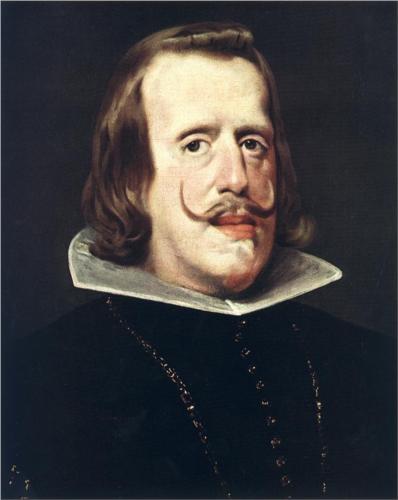
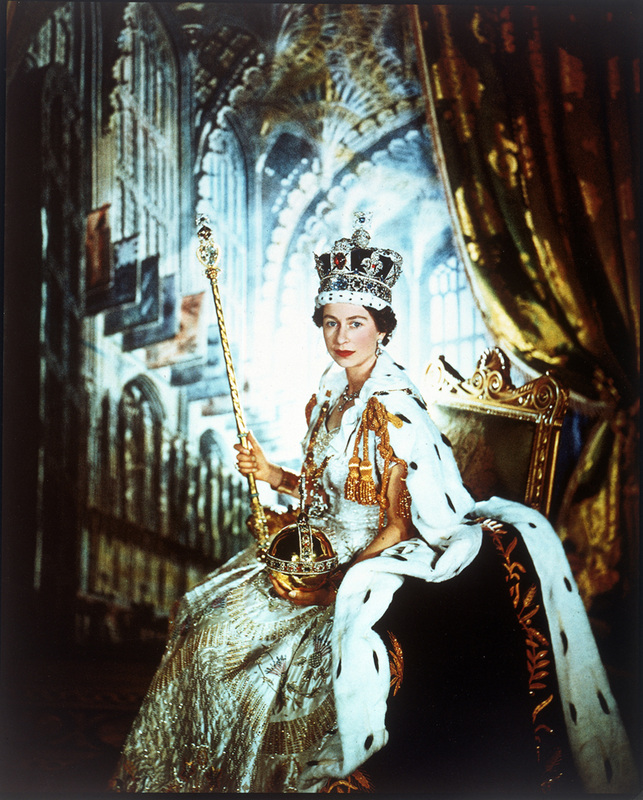
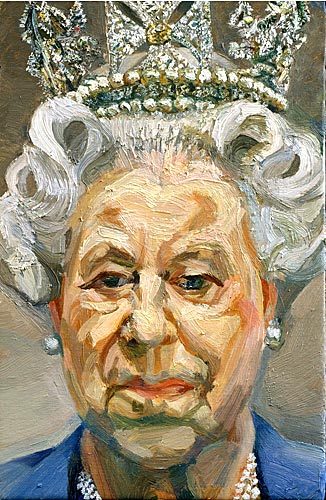
![]() Jane Avril by Toulouse Lautrec 1893 _ Words and visual art. The combination is an old and fruitful one, not just something invented by grafitti artists. I find a lot of it in contemporary art, so here's a look back at the tradition. Posters, of course, have a starring role. The inventive compositions of Toulouse Lautrec, among the best of all poster designs, went hand in with the development of color lithography at the end of the 18th century. If you've ever pined to be part of the nightlife of turn-of-the-century Paris, like Marion Cotillard in 'Midnight in Paris', you can blame it on those lively Lautrec posters! see the history of posters with the weblink below _ Further back, you can find the Greeks including lettering on their ceramic vessels, prompting understanding of complex stories of gods, heroes, and mythic events with what are essentially the credits. This example is a bit gory, but at least you know who's doing what. _ Beautiful examples of words and art abound in Western Art. The magnificent Book of Kells, from the 9th century, is more art in words than words with art. Each vellum page, decorated heavily with color and twisting puzzles of design and Christian meaning, is a tribute to artistic imagination and invention - and courage. The Book of Kells was created during the so-called 'Dark Ages,' when European civilization was at daily deadly risk from marauders - it is thought to have been created in the Abbey of Kells, north of Dublin (where it now resides in Trinity College) though may have been created elsewhere and brought along with monks fleeing the Vikings. ![]() page from 13th c bestiary _ A bit later, in more peaceful times, words and images come together in ways that reflect increasingly worldly concerns. Bestiaries, which had a fruitful period of popularity during the Middle Ages, began as reflections of a Divine Natural World, but evolved into explorations of early science. Illustrations and descriptions may border on - or be - fantasy, but they attest to a growing human hunger for knowledge about the real world. _ Speaking of fantasy, William Blake lived in a world that wasn't quite of this earth at times and he documented his visions carefully in words and images. His beautiful poem, The Tyger, is here illustrated in his unmistakeable style, a blend of realism, naivete, and charm. _ It's impossible to consider words and art without including the masterful Arabic tradition, in which there is virtually no division between art and calligraphy. Non-Arabic readers don't need to struggle with the question of what is being said (often references to Allah and the Koran) to marvel at the compositions of gorgeous forms and twining shapes. This exquisite page is a contemporary example by a living calligrapher named Ozcay. see more of his impressive work with the weblink below _ And of course, there's grafitti - it won't go away, it's been around as long as there have been walls to write it on. The current moment of grafitti is an exceptionally creative one - you may not agree with the principle of grafitti but there's some beautiful work out there helping carrying on a long tradition of words and art. Do you have a favorite combination of words and art? Leave a comment and tell me about it! High Branches - The Center for Art in Wood 01/05/2012
![]() 141 N 3rd St Philadelphia _ Of Chinese astrology's five elements, wood is associated with harmony and cooperation. Wood is also the heart and soul of the newly reinstalled Center for Art in Wood in Old City, Philadelphia, and harmony and cooperation are on full display. The Center for Art in Wood, which began in 1986 in response to a series of exhibitions and symposia, is recognized as 'one of the most valuable resources for the education, preservation and promotion of the field of art made from wood.' Residencies and outreach programs, an extensive permanent collection, exhibitions, and a research library mark it as the heart of an intriguing traditional and contemporary world. ![]() X Series by Todd Hoyer _ This is not a jolly uncle's good natured whittling; the woodworking here is the absolute pinnacle of art, form, imagination, and craftsmanship. "Turning to Art in Wood: A Creative Journey," the 25th Anniversary exhibition of the permanent collection (on display until April 21, 2012) is a stunning experience, organized to invite the viewer on a meandering path from one breathtaking piece to the next. Make your way through the beautiful airy space, noting how groups of objects focus on a technique, a type of wood, another marvelous idea of how to coax the amazing material of wood into yet another fantastic form and finish. ![]() Cor Blimey by Robin Wood _ Whatever you think you know about woodworking, you're going to be surprised by how much more there is to be imagined, built, turned, polished, created. Wood in all forms sits on the floor, stands on pedestals and platform, hangs on the walls; one engaging work, a pile of rough, unfinished turned forms clusters against one inner wall under a video showing the artist, Robin Wood, at work. Silent but dynamic, Mr. Wood's presence in the gallery is a quietly compelling reminder of the labor that went into each of these objects, no matter how perfectly pristine in finished form. ![]() Nagare Vessel by Dale Nish _ If I had to pick a favorite - it would be very difficult - I might opt for Dale Nish's Nagare Vessel. The 'wormy ash' wood has a soft velvety tone, and the natural holes and trails contribute to a topography that is a beautifully conceived and finished conversation between artist, material, and the grander idea of nature itself. The result could not be a more perfect reminder of the spirit of harmony and cooperation represented by the woodworker's art. The Center for Art in Wood is at 141 N 3rd Street Philadelphia 19106 Turning to Art in Wood: A Creative Journey is on display through April 21, 2012 http://www.centerforartinwood.org/ _ Art Connects Us - Postcard Art History 12/31/2011
![]() Picasso - Man in a Straw Hat 1971 _ My motto in teaching and writing about art, including this blog, is 'Art Connects Us.' Art History is a wonderful way to feel the lively embrace of the universal human experience, but if you've ever taken an art history class you probably know that the subject is not ordinarily presented as inclusive. I taught the basic Art History survey course for years so I know well the curriculum of "See what the Greeks did, thought, made - theirs was a distinct culture completely alien to that of 5th c India, 9th c Americas, 16th c Africa, etc., etc., etc." But there is so much art, so many fascinating cultures, time periods, peoples, artists - and it's all part of the human story. ![]() Hans Holbein - Sir Thomas Wyatt 1535 _ For me the best approach to art history is to find a common ground in a human idea or concern and then have the fun of exploring the endlessly interesting ways in which culture, climate, geography, available materials, beliefs, and individual imaginations conspire to create distinctive expressions of those basic human ideas and values. ![]() 'Mattei Athena' Classical Greek (Louvre) _ I teach a university class to students of widely diverse backgrounds using this approach - it's a rich experience for the students and stimulating for me as the teacher. The broad themes sweep everyone into the discussion so there's no reason to feel excluded or sidelined - we're all part of a continuing tradition of art and human expression. Human figures, animals, beliefs, power, wealth, landscapes, family portraits: the list of possibilities never ends. ![]() Gabon (Fang) 19th C. _ The human face, for example, holds a place of importance in nearly every culture and time and gives clues to deeply held ideas and values - but hold onto your seats because the differences in expression are astonishing. Every culture and time period chimes in with intriguing forms and layers of meaning that define and redefine beauty and art. ![]() Vermeer: Girl with a Pearl Earring 1665 _ The goddess Athena's beautiful stone face is a perfect representation of the serene, logical Classical Greeks, but just as representative of its culture is the lovely Gabon Mask, in which geometry forms a vital part of the design, and the chalkiness of the face indicates a spiritual connection. Vermeer's fresh approach in 'Girl with a Pearl Earring' provides an intimate, seemingly casual portrait, as does Utamaro's glimpse of a much more sophisticated class of women, the Edo Period Geisha. ![]() Utamaro: Okita of the Naniwaya Teahouse 1790 _ Picasso's wild 'Man in a Hat' would seem madness to the Greeks, as well as to Hans Holbein and the court of Henry VIII, to which the pencil drawing of poet Thomas Wyatt gives us insight, but Modern Art finds in it a fresh creative approach to an old subject. Contemporary photographer Cindy Sherman's use of her own face as a canvas speaks perhaps all too clearly of our familiarity with complex questions of shifting identity. ![]() Cindy Sherman: Portrait photo _ As we take our seat around the table of humanity, the commonality of 'Face,' as in this small sampling of examples, gives us a place to begin a powerful conversation about the meaning of being human. The discussion may lead in odd directions and take unexpected turns, but how much richer we all are for the inclusion of so many different viewpoints. ![]() Rubens: Son Nicholas 1619 _ To expand this work and these ideas I'm offering a series of online Art History 'classes' in the form of postcards - Postcard Art History. Each of the series follows a theme in in 10 week subscriptions, with art ranging broadly across cultures, styles, time periods, and artists. Each week you receive a pdf postcard with an image on one side and a brief but solidly informative explanation on the other. Week by week you'll see how cultures and eras interweave and share ideas, values, beliefs. You'll discover differences in the art that work to emphasize commonalities in human experience, and you'll be excited to find new insights and discoveries about art and art history. The themes are fun and intriguing, from 'Supermodels: Glamour Girls of Art History,' 'Gods of All Shapes and Sizes.' 'Happy Families', and others - and I'll be adding new themes regularly. A Postcard Art History series makes a unique, interesting gift for family and friends, a good way to catch the interest of children, and a great treat for YOU! If you enjoy my ArtSmartTalk blog I hope you'll support Postcard Art History and recommend it to others. Find all details at www.postcardarthistory.com. Leave me your email and ask for a sample postcard! Post Title. 12/31/2011
This is your new blog post. Click here and start typing, or drag in elements from the top bar. Cats, Feasts, and Chardin 12/14/2011
![]() Detail from 'The Ray' by Chardin _ Cats, like children, are hard to include in serious art - too cute. For a change from the modern art of the last two posts, here's some 'serious' historical art that happens to include cats, by one of my favorites. I like cats - I have two - and I'm very fond of the artist Jean-Baptiste Simeon Chardin. Born in Paris in 1699, Chardin grew up and spent his life within the city walls without much need or thought for travel beyond. Once he caught the attention of King Louis XV he was granted a studio in the Louvre and lived there until his death in 1779. (At the time the Louvre was an abandoned royal residence being used for artisan workshops and meeting places for the artistic and scientific academies founded by Louis XIV - Chardin went regularly to meetings of the arts academy after he became a member.) ![]() Self Portrait with Eye Shade 1775 _ Chardin was a true local artist, mostly self-taught but smart and observant - and a quiet revolutionary. In contrast to the grandiose Rococo art that is the signature of the period, Chardin took his cue from the deceptively simple Dutch still life tradition. The golden age of Dutch Baroque painting was drawing to an end, but masterful examples of composition, virtuosic effects of light and texture, and the rich possibilities of a simple story told with style and close attention to detail would have been easy for Chardin to find. ![]() Still Life with Fish by Adriaenssen 17th c _ 'Deceptively simple' is a good phrase to keep in mind for Dutch still lifes as well as for the work of Chardin - there is far more than meets the eye. Many Dutch still lifes feature grandiose settings of lavish expensive foods and exquisite vessels of glass, silver, and brass - they do double duty in celebrating the enormous prosperity of Holland during the 17th century, while also paying homage to the simple pleasures of life, free of tyranny by church or king (many contain intricately coded messages, but that's a complicated subject for another post.) This example by Alexander Adriaenssen, who died shortly before Chardin was born, is somewhat atypical of Dutch still life, but a close match for Chardin. The concentration of raw foods anticipate the feast to come, inviting us behind the scenes to identify with the simpler folk who will do the work of preparation for the 'upstairs' party, while shooing away the cat (look closely) from tempting pile of fresh fish. ![]() The Ray by Chardin 1728 _ Chardin's revolution was a similar peek behind French aristocratic grandiosity, gently (and probably unconsciously - he was no outright rebel) guiding thoughts to a democratic future that would soon slap France hard across its rouged and powdered face. 'The Ray' from 1728 was one of several early paintings that gained him admission to the Academy. I've always found it to be one of his most interesting stories in paint. There are messages here of life and death, cruelty and comfort. Note the cat (really a kitten) - cute at first glance but with the demonic leer of a killer intent on prey, and in contrast the strange 'face' of the eviscerated ray that evokes a sad commedia del arte clown. The knife - an instrument of death - and the pitcher - a container for water, the stuff of life - hover just at the edge of the table, a precarious position that may be there to remind of us the precariousness of existence. (Click on the image for a larger view.) ![]() The Silver Tureen by Chardin 1728 _ 'The Silver Tureen' also by Chardin, also from 1728, also with a cat, seems a meditation on life, with the cat sitting quietly staring into the blank eyes of his fellow creatures , seeming to question the whimsy of fate. (Click on the image for a larger view.) | ArtSmart Consulting
|


RSS Feed