artsmarttalk.com
Share ArtSmart
  • Home
  • ArtSmartTravel
    • ParisArts&Pleasures >
      • Details: Costs and Activities
    • ParisCathedralsTour >
      • Details: Costs and Activities
    • BurgundyWinesTreasures
    • SpainAndalusiaTour
    • What to expect from an AST tour
    • Travel Art Talks >
      • Paris: Art and History
      • Art and Spirit: The Cathedrals of Europe
      • The Loire: Wine and Chateaux
      • Burgundy: Wine, History, Elegance
      • Bordeaux: Wine, City, Villages
  • MacGregorArt
  • Blog/Contact/About
    • About Marilyn MacGregor
    • Contact Me

Rockwell Kent - Art, Nature and the Common Man

6/27/2012

1 Comment

 
Picture
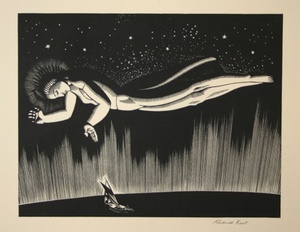
Godspeed 1931
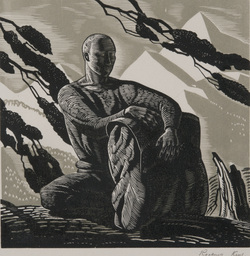
Rockwell Kent was both a perfect creature of his time and a complete original. His brawny, broad-shouldered, but sleekly elegant Art Deco illustrations are firmly planted in early 20th America, when books and print served as potent messengers of cultural meaning, capable of the sharp sting of reproach as well as the fine pleasure of a literate, well-composed page. He is one of a number of American artists, including some of those I wrote about two posts ago, who give us a clear picture of a very particular time.
Picture
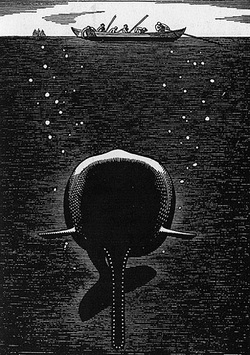
But on the other hand, there is only one Rockwell Kent, the fearless adventurer who stalked the wild places of the earth in sturdy boots, a pen and notebook ever at hand. Perhaps best known for his stellar illustrations for the celebrated Lakeside Press edition of Moby Dick  (1930)


illustration from Moby Dick 1930

Picture
Voyaging - Self Portrait
Kent needed no paltry second-hand references for his churning waves, high seas, and angry nature - he'd been there. The list is long and impressive - Greenland (where he was shipwrecked and lived for some time) Tierra del Fuego, Alaska, Newfoundland, an island off the Maine coast - and the wilds of the Adirondack Mountains, his stateside home for many years.
Picture
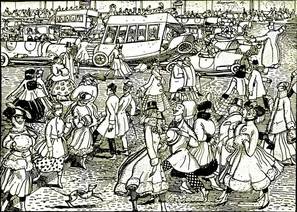
Vanity Fair illustration by "Hogarth Jr."
Kent walked another tightrope of sorts in his career and life, moving from 'society illustrations' for Vanity Fair (he signed them Hogarth Jr., a nod to William Hogarth, the sly 18th c. English artist and satirist) and sleek ads for a luxury boat manufacturer, to high-toned book commissions, and finally to crisply critical social commentary that aligned with his deeply-held belief in the rights of the common man.

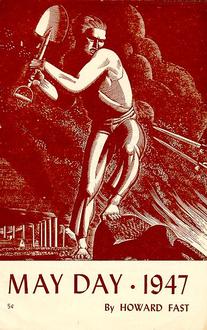
'Workers of the World, Unite' and 'Wake Up America,' both in a show at the Philadelphia Museum, are good examples of how he could temper his message from urgent to subtle. 'Workers of the World, Unite,' seen here on the cover of a 'red' journal, is a powerful call to action while 'Wake Up America' has more than a little Norman Rockwell folksiness - it takes a few moments to register the message of numbing destructive apathy -  time is running out and the flag is being bent and broken overhead.
Picture
Workers of the World, Unite
Picture
Wake Up, America
Picture
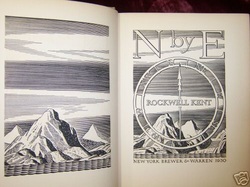
N by E - Rockwell Kent 1930
Kent was a gifted writer too, one who put his experiences and his philosophies into words as well as pictures. Like his art, his books are a slightly dated but earnest, authentic record of a fascinating period of time from a singular perspective. A passage from his book Voyaging spells out his identity: "it the reality of mountains and plains, the sea and the unfathomable heavens, unchangingly forever dominating man, cradling him in that remote hour of his awakening into consciousness, forever smiling, brooding, thundering upon him, that have imposed their nature upon man and made him what he is." 
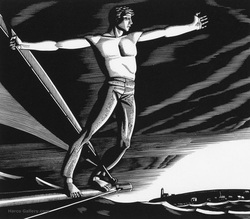
Picture
Home Port 1931
Along with many other creative intellectuals, Kent put time into the Communist Party in the hopes that it would provide a better answer; inevitably his involvement led to clashes with Joe McCarthy and his committee. It also, however, led to remarkable honors and actions. Kent, the first American artist to show his work in the U.S.S.R., was awarded a Lenin Peace Prize; he donated the money to help women and children in both Vietnams during the Vietnam War years.
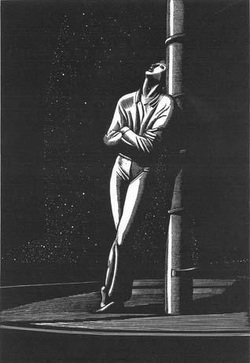
Picture
Man at the Mast 1929
Kent's brand of bold outspoken courage in art and life, put to the service of big ideas and a greater good, is a bit thin on the ground these days - it would be nice to see more of it right now in our moment. Rockwell Kent would have no trouble recognizing that help is needed for the poor, the needy and the hardworking common 'man.'

The Philadelphia Museum is currently showing Rockwell Kent - Voyager: An Artist’s Journey in Prints, Drawings, and Illustrated Books. Through July 29, 2012. The show is organized by Kent's longtime friend Carl Zigrosser, the founding curator of the museum's department of prints and drawings. The show includes a range of work, including woodcuts, pen and ink drawings, pencil sketches, lithography (a self-portrait with the stone that made the print is fascinating) and watercolors.


http://www.philamuseum.org/exhibitions/760.html
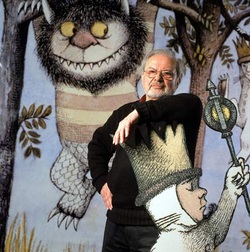

1 Comment

Maurice Sendak - The Work of A Lifetime

6/21/2012

1 Comment

 
Picture
Maurice Sendak 1928-2012
Childhood was very good to Maurice Sendak - not his own so much, but the childhood he gave to others. His books opened up new worlds for children. Though it was sad to lose him last month, he left a great deal - great in all senses - not a bad way to go at 83. Many of the children that were his first audience are now grey-haired grandparents, but I’ll bet a little boy named Max, dressed in a wolf suit, still lives in their hearts.

Picture
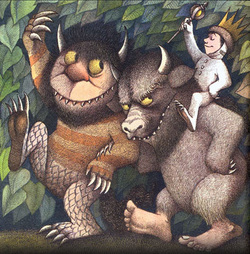
From Where the Wild Things Are 1963
Where the Wild Things Are came out in 1963, the same year Sylvia Plath’s The Bell Jar and Betty Friedan’s The Feminine Mystique were published. As much as the others Where the Wild Things Are caused an uproar – it was a time when the future was challenging an outmoded mindset with a dose of hard reality. Librarians and teachers vilified Sendak’s book, calling it dark and too frightening for children, but the kids knew better, recognizing in the simple story of a child struggling to control his own wild impulses the basic truth that childhood is, in fact, darker and more frightening than adults own up to once they’re past it.

Picture
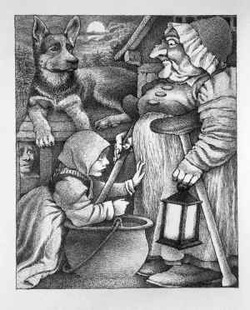
From The Juniper Tree 1974
Sendak had a gift for taking childhood seriously - I’d call it his greatest strength. Too many well-intentioned kid’s book authors think children and their state of being are ‘cute.’ Sendak never made that mistake. His own well-documented childhood in a family of Holocaust survivors (along with ever-present specters of his family’s victims) gave him a front row seat on dark and frightening, but combined with the ebullient humor and spirit ever present in his work, his was a powerful, compelling vision.

Picture
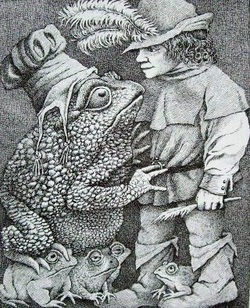
From the Juniper Tree 1974
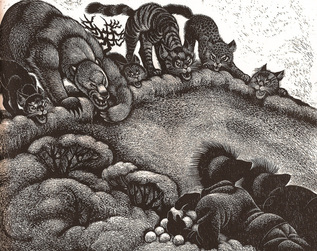
What isn’t always mentioned with Maurice Sendak is how steeped he was in the traditions of children’s illustrations. He was an original with a beautifully unique voice, but like all great artists, he had a profound knowledge of and respect for his craft and his predecessors. In The Juniper Tree, a collection of Grimm’s Tales (1974), Sendak went directly to the source with a meticulous technique based on European, especially German, engraving techniques. The Juniper Tree is a tour de force of children’s illustration, very different from the bolder linear drawings in Where the Wild Things Are and In the Night Kitchen, but with Sendak’s signature faces, expressions, and gestures  - deeply thought, a bit troubling, and humorous, all at the same moment.

Picture
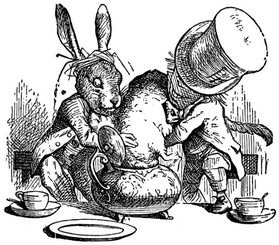
John Tenniel Alice's Adventures in Wonderland 1865
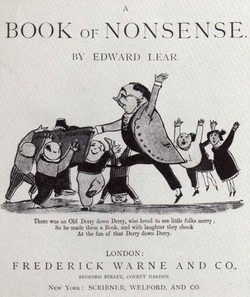
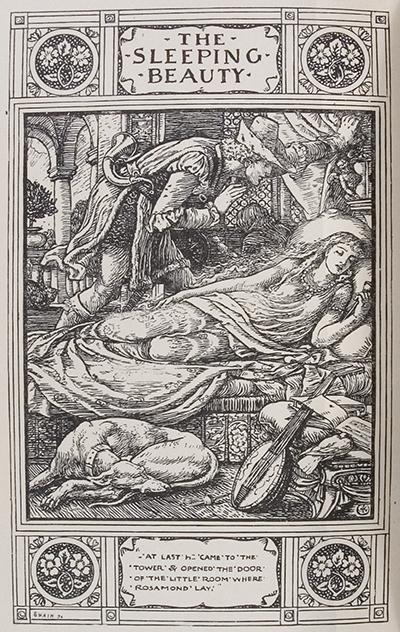
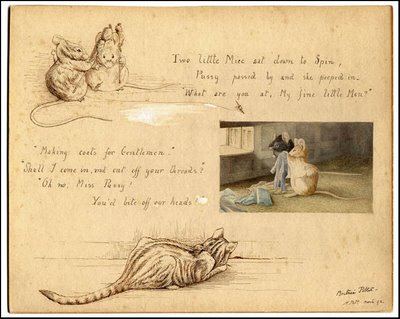
The German connection in Sendak’s work has been clearly noted, but there is plenty more from the broad field of fine children’s illustration. Beatrix Potter’s anthropomorphic animals, full of charm but no squishy sentimentality, John Tenniel’s seriously, delightfully kooky world in Alice in Wonderland, Walter Crane’s gorgeous command of line and composition, Edward Lear’s goofy playful illustrated verses – and plenty more, including Fritz Eichenberg, an older contemporary.

Picture
Edward Lear 1804
Picture
Walter Crane 1883
Picture
Beatrix Potter - diary page 1880's
Picture
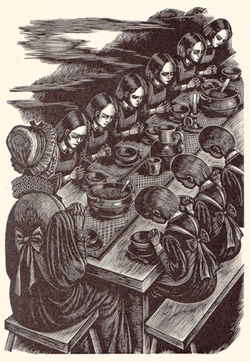
Fritz Eichenberg Jane Eyre 1943
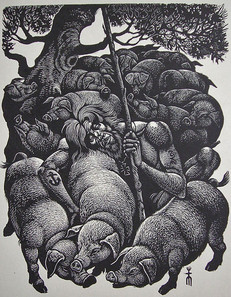
As a young illustrator Sendak must have been well aware of Eichenberg, who fled Germany ahead of the Nazi’s in the 30’s and built a significant career as a teacher and illustrator in New York. Eichenberg’s dark brooding wood engravings for Jane Eyre and Wuthering Heights are among my most enduring childhood memories - when I encountered the editions as an adult I felt the shock of recognition of a long-lost friend. Sendak and Eichenberg were, in some senses, kindred souls, each a master with an affinity for craft and fine careful work in illustration, divided and united by a common history.

Picture
The Prodigal Son 1967
Picture
Child's Christmas in Wales 1969
Picture
Maurice Sendak In the Night Kitchen 1970
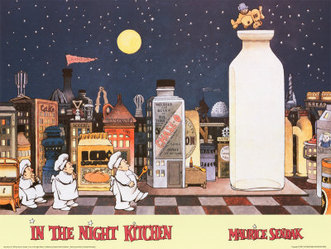
Sendak’s path led him to lighter ground where his sense of play had full rein, not only in books but in theatre and opera design. Spend some time with Where the Wild Things Are and In the Night Kitchen and you’ll see that Sendak was always a set designer – his books unfold with all the drama of a well-made play. He never shortchanged children - he gave them the best, and his best was magnificent. The work of a lifetime, and lifetimes before him, is in every line he drew.

An exhibit of Sendak's work has just opened at the Rosenbach Museum in Philadelphia.
Maurice Sendak: A Legacy continues through May 26, 2013

https://www.rosenbach.org/learn/exhibitions/maurice-sendak-legacy

1 Comment

Grit and Revolution: The Ashcan School

6/14/2012

0 Comments

 
Picture
George Bellows: Stag at Sharkey's 1909
Isn't it funny how so many art movements are named by snarky insults? The 'Impressionists', The 'Fauves', even the Gothic style - these were not terms of endearment but put-downs from critics who clearly thought they knew what was 'art' and what was not. 'The Ashcan School' is another example, this time from early 20th century America.

Picture
Artists and Friends in John Sloan's NY studio 1898
In the context of a time when so much artistic fur was flying in Europe (Cubism, Surrealism, Picasso, Matisse, etc.) the work of the Ashcan School can seem a bit tame and stodgy, but these artists, like their European contemporaries, were revolutionaries, rebelling against conservative American tastes - which were at least, if not more, conservative than traditional tastes in Europe.

Picture
Chicago Art Institute Students: Flyer 1913
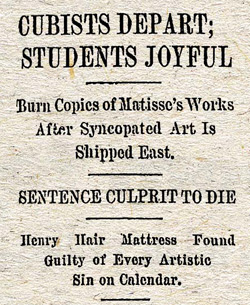
In 1913 the famous Armory Show was mounted in New York, bringing the first taste of avant-garde art to the U.S. The Armory Show, an earthquake that shook expectations and assumptions to their foundations, was recognized as a colossal event but one that was shocking, even dangerous. The New York Tribune called it “A Remarkable Affair Despite Some Freakish Absurdities.” It is said that notices were posted warning pregnant women away for fear they would miscarry, and when the show moved to Chicago, Matisse was given a mock trial on charges of 'artistic murder, pictorial arson, artistic rapine, total degeneracy of color, criminal misuse of line,' found guilty, and sentenced to die.

Picture
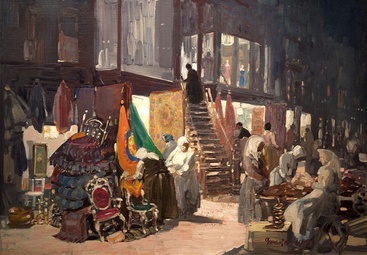
George Luks: Nighttime Buying and Selling on Allen Street 1905
Organized by American painters eager to bring the excitement of Modern Art closer to home, the Armory show included a healthy number of forward-looking Americans, foremost among them the artists who would come to be known as The Ashcan School. A first American volley against the strict traditions of the National Academy was the 1908 show in New York by The Eight, a group of painters circled around the charismatic teacher/painter Robert Henri. It was their only group showing - the circle then expanded, with one result being the group that came to be known as The Ashcan School.

Picture
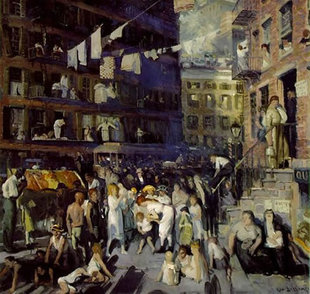
George Bellows: Cliff Dwellers 1913
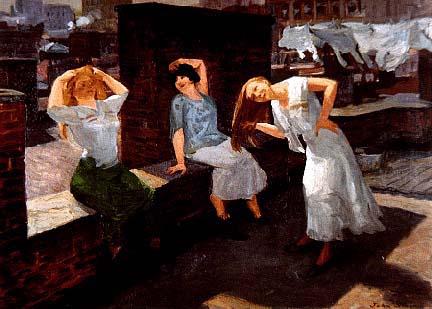
As you might guess by the name, these painters, including Henri, George Bellows, John Sloan, George Luks and Everett Shinn, concerned themselves not with idealized beauty, but with a realistic perspective on the gritty life of New York's poorer neighborhoods and rich colorful streets.

Picture
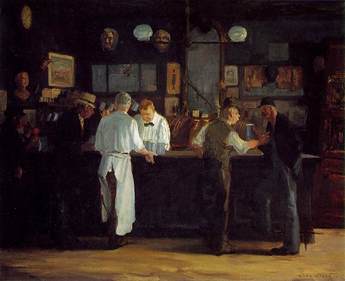
John Sloan: McSorley's Bar 1912
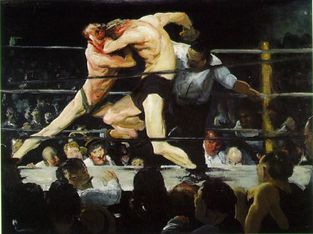
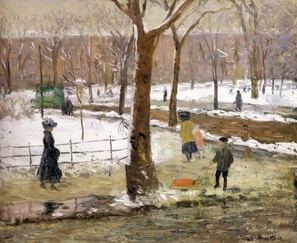
Many of them had backgrounds as newspaper illustrators so there is an element of reportage in the work of the Ashcan School, along with an acceptance, even celebration of human nature in its most banal and ordinary forms. There's more than a bit of Bruegel in the Ashcan School, coupled with the lush expressive brushwork of Frans Hals and Velasquez - no accident. These painters were sophisticated and knowledgeable and most had spent time traveling and studying in Europe. Notable works include Bellow's mighty Stag at Sharkey's (1909) his marvelously detailed Cliff Dwellers (1913), George Luks's Nighttime Buying and Selling on Allen Street (1905), George Bellow's Washington Square South (1910) and John Sloan's McSorley's Bar (1912.)

Picture
William Glackens: Washington Square South 1910
Picture
John Sloan: Sunday, Women drying their Hair 1912
Picture
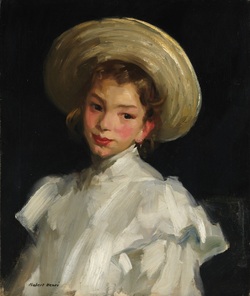
Robert Henri: Dutch Girl in White 1907
Robert Henri, for being such an inspiration to these painters of lively genre scenes, is better known for portraits - he's a marvelous painter whose brushwork and handling of paint is simply delicious. He did quite a few portraits of children, especially on his travels. This lovely example is from a stay in Holland in 1907.

The National Gallery in Washington has just opened a show of the work of George Bellows - I hear it's wonderful and can't wait to see it! http://www.nga.gov/exhibitions/bellowsinfo.shtm

The newly re-opened Barnes Collection in Philadelphia includes many works of William Glackens and examples from some of the other Ashcan painters.
http://www.barnesfoundation.org/collections/art-collection/collection-search


0 Comments

Wild Wonderful Grayson Perry - Brave New Worlds

6/5/2012

1 Comment

 
Picture
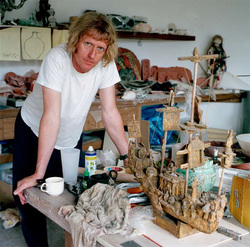
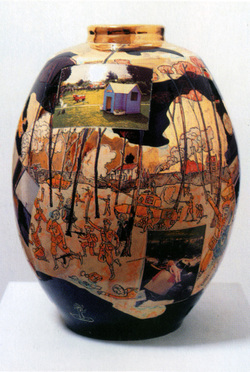
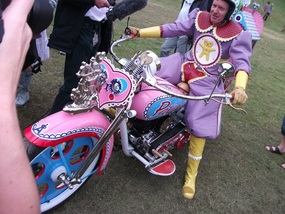
Hip hip and cheerio to the Queen and all that - you may think that England is the last bastion of conservative tradition, but not when it comes to the Arts. The US caved long ago to conservative interests in terms of major public funding and awards, but the Turner Prize, awarded each year to a British artist under 50, reminds us that energy, spirit and imagination should be celebrated, even if you don't like it or agree with it. In 2003 the Turner Prize was awarded to Grayson Perry, described by Wikipedia as 'an English artist, known mainly for his ceramic vases and cross-dressing.'

Picture
I recently heard Grayson Perry on a BBC podcast about traditions and was so struck by his interesting remarks that I had to find out more about him - and discovered a whole new world. I can't believe I've missed him until now - he's no shrinking violet. A new member of the Royal Academy, he currently has a big show at the British Museum called The Tomb of the Unknown Craftsman. Part of his contribution to the Traditions discussion was a comment about liking to work with mediums that require skill and relate to age-old processes, not only ceramics but lately also tapestry.

Picture
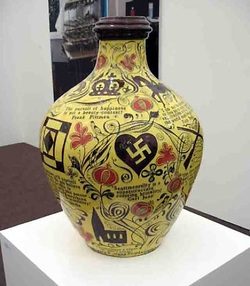
Quotations from the Internet 2005
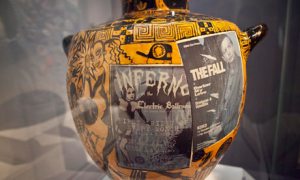
In his ceramics he sticks with traditional forms such as standing vases reminiscent of Greek amphora; he claims to like lulling people into a feeling of security with forms they think they recognize and with expectations of reassuring patterns - flowers or a simple landscape - and then hitting them over the head with his intricately drawn decorations full of wit, puns, historical references and social comment.

Picture
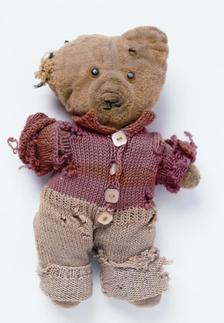
He says he has little use for the post-Duchamp conceptual idea of art - it's art if I say it's art - so goes out of his way to make his life as well as his art an exercise in complicated, elaborate craftsmanship. And he's having a great deal of fun doing it - he seems a bit like Cindy Sherman with a sense of humor. And there's his 50-year old teddy bear, Alan Measles, who is something of a god in his world.

Picture
Alan Measles
Picture
Grumpy Old God 2007
Picture
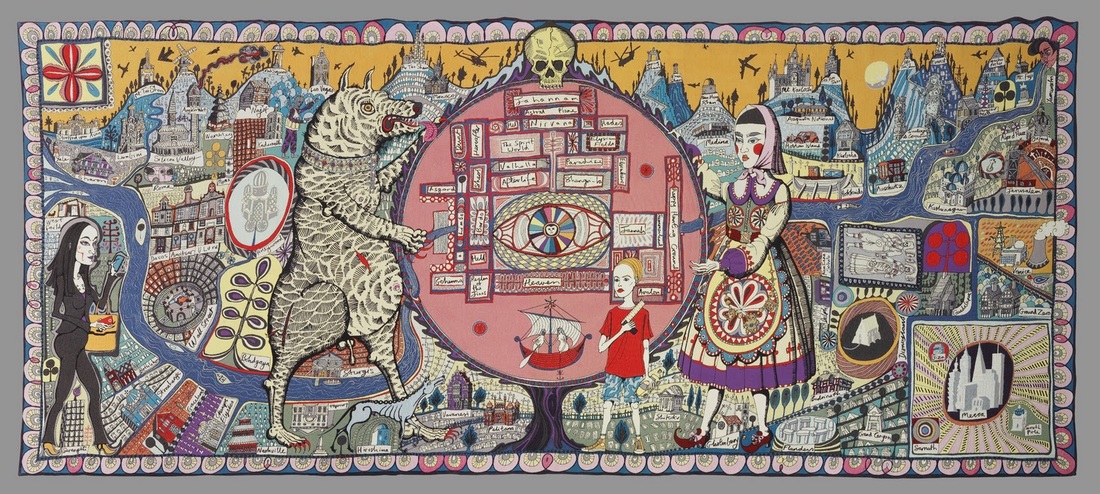
Map of Truths and Belief 2011 (tapestry)
Picture
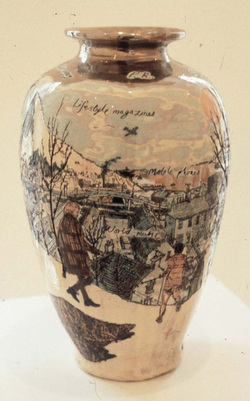
Punters in the Snow 1999
I've always on the lookout for great use of drawing and here's a wonderful example of a good hand, plus mind and heart working together to create a sum much greater than the parts. An instant favorite for me is his Punters in the Snow - a witty homage to Bruegel's elegiac 16th century painting Hunters in the Snow. Grayson Perry, his work and life, brought to mind Shakespeare's line from The Tempest: O brave new world That has such people in't! 

I found visuals and interesting information and about Grayson Perry on several blogs including these:
http://thissydneylife.wordpress.com/tag/grayson-perry/
http://thecourseofempire.blogspot.com/2012/04/grayson-perry.html
http://normsonline.wordpress.com/2012/01/06/grayson-perry-tomb-of-the-unknown-craftsman/
and a longer article on the Royal Academy website
http://www.royalacademy.org.uk/ra-magazine/autumn-2011/fantasy-factory,298,RAMA.html

1 Comment

    Share ArtSmartTalk

    Follow @MarilynArtsmart

      ArtSmartTalk by email

    Submit
    Picture


    MacGregor-Art.com
    Cards and art gifts with a Fine Sense of Fun
    Also at http://www.etsy.com/shop/MacGregorArt

    ArtSmart Consulting
    BETTER CONTENT for your art site
    http://www.artsmarttalk.com/artcontent.html _

    TRY A FREE SAMPLE!
    Postcard Art History
    Easy, fun way to learn about ART - a great gift! http://www.postcardarthistory.com/

    NetworkedBlogs
    Blog:
    ArtSmartTalk
    Topics:
    Art History, Design, Art
     
    Follow my blog

    Accredited Online Colleges

    Categories

    All
    19th C Art4a3f8ec7db
    20th C59300e1f29
    African Art
    Almutanabbi Streetbb1c3786e2
    American Art
    Ann Hamilton
    Apple
    Apple Computers
    Arabic Poetry
    Architecture
    Art
    Art And Nature
    Art And Technology
    Art As Collective Memory
    Art Auctions
    Art Books
    Art Forgery
    Art Galleries
    Art History
    Art In Gardens
    Art Installation
    Art Installations
    Art Licensing
    Art Of Spain
    Art Prints
    Art Technology
    Baghdad Books
    Barnes Collection
    Biennial
    Book Project
    Books
    Brooklyn Museum
    California Design
    Chelsea Galleries
    Chess
    Color
    Constable
    Contemporary Architecture
    Contemporary Art
    Contemporary Design
    Design
    Detroit Institute Of Arts
    Drawing
    E H Shepard
    El Anatsui
    Etching
    European Art
    Expressionism
    Fabric Design
    Flags
    Folk Art
    French Art
    French History
    French Portraits
    Galleries
    George Bellows
    Goya
    Goya Black Paintings
    Goya Portrait
    Hand-made Books
    Historical Art
    Hokusai
    Ho Tanner
    Illustration
    Installation Art
    Iraq
    Jean Clouet
    Lacma
    Lewis Chessmen
    London
    Los Angeles
    Mac Computers
    Mary Cassatt
    Matisse
    Met Museum
    Metropolitan Museum
    Metropolitan Museum Of Art
    Modern Art
    Modern British Painting
    Moma
    Moma Ps1
    Moons
    Museums
    Napoleon
    National Gallery
    Nature
    New Architecture
    New Art
    New Design
    New Goya Painting
    New York
    New York Art
    Norse Art
    Novels About Art
    Old City Philadelphia
    Online Art Sites
    Outdoor Art
    Outsider Art
    Painting
    Paris
    Pat Steir
    Performance Art
    Philadelphia
    Philadelphia Art
    Philadelphia Museum
    Photography
    Plein Air
    Portraits
    Product Design
    Red
    Religious Art
    Rembrandt
    Rome
    Rothko
    Royal Portraits
    Sarah Sze
    Scottish Art
    Self-portraits
    Significance Of Art
    Sketching
    Southern California
    Soutine
    Spanish Art
    Spanish History
    Steve Jobs
    Technology
    Thanksgiving
    The Importance Of Art
    Turner
    Van Gogh
    Velasquez
    Venice Biennale
    Whitney Museum
    Words And Art
    Young Artists

    Archives

    August 2013
    May 2013
    February 2013
    January 2013
    December 2012
    November 2012
    October 2012
    September 2012
    August 2012
    July 2012
    June 2012
    May 2012
    April 2012
    March 2012
    February 2012
    January 2012
    December 2011
    November 2011
    October 2011
    September 2011
    August 2011
    July 2011

    Full Archives at
    http://artsmarttalk.blogspot.com

    RSS Feed

    BLOG ROLL
    http://www.donartnews.com/
    http://joanmikkelsenphotography.blogspot.com/
    http://newcityart.blogspot.com/
    http://experimentstation.wordpress.com/
    http://www.dailyartfixx.com/
    http://venetianred.net/
    http://blog.art21.org/
    http://ahuskofmeaning.com/
    http://eye-likey.blogspot.com/
    http://underthegables.blogspot.com/
    http://www.imaginarymuseum.net/
    _http://www.midcenturyfolio.com/